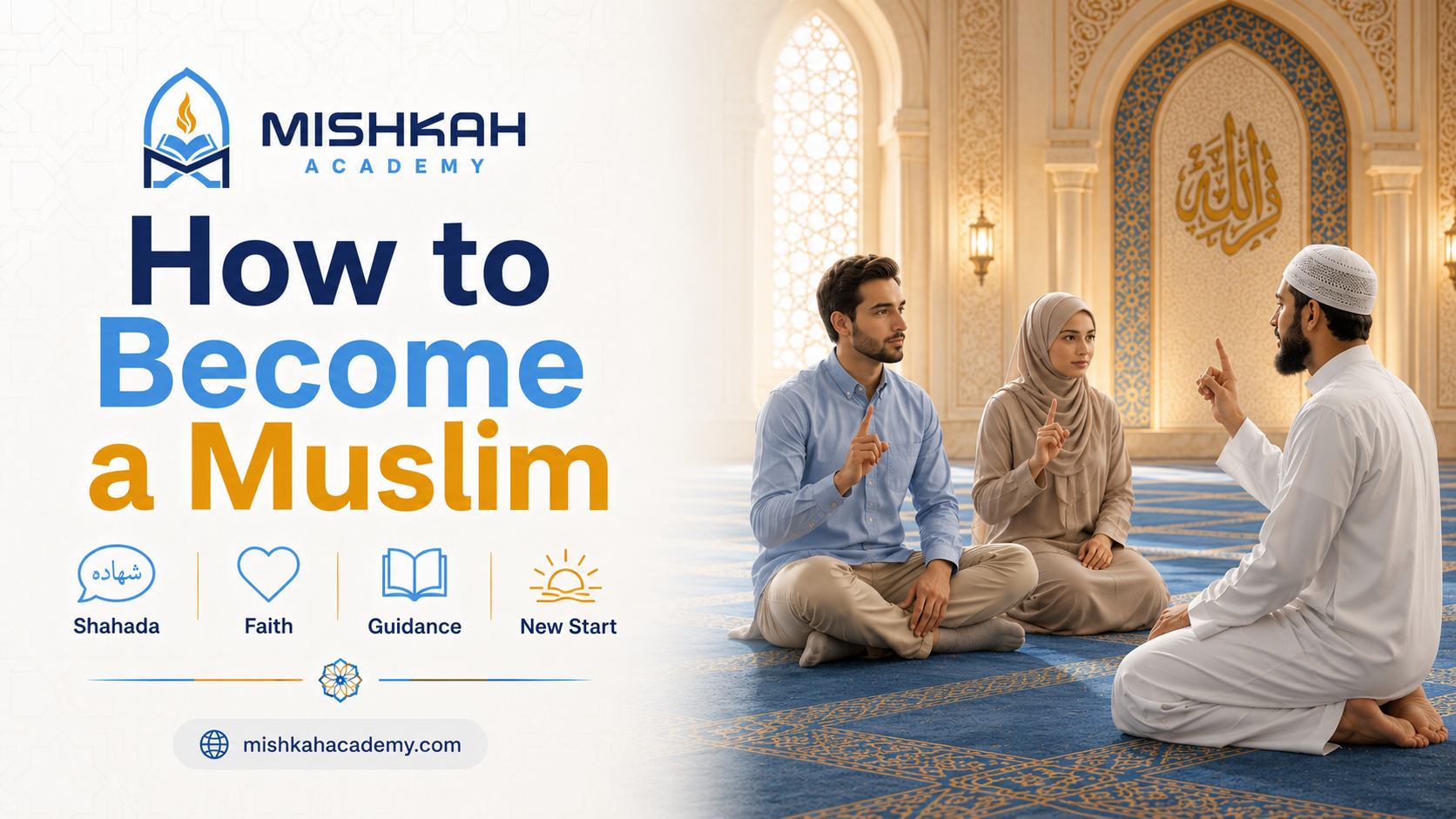
Every year, tens of thousands of people across the USA, UK, Canada, and Australia choose to become Muslim — drawn by Islam’s clarity, its direct relationship with God, and its comprehensive framework for living. This complete guide addresses not just the act of declaring faith, but everything that follows: the beliefs, the practices, the lifestyle, and the community.
|
What Does It Mean to “Become” a Muslim?
Table of Contents
ToggleThe Arabic word “Islam” means submission — the willing, conscious surrender of one’s will to the will of Allah (God). A Muslim (مُسْلِم) is literally “one who submits.” Becoming a Muslim is therefore not merely joining a religion; it is adopting an entire identity and worldview grounded in that submission.
| Convert or Revert?
Many Muslims prefer the term “revert” rather than “convert.” The reason is theological: Islam teaches that every human being is born in a state of Fitrah — a natural inclination toward the worship of one God. To become Muslim is therefore to return to that original, pure state, not to adopt something foreign. The Prophet Muhammad ﷺ said: “Every child is born in a state of Fitrah [natural disposition toward God].” (Sahih al-Bukhari) |
The distinction matters because it shapes how new Muslims see themselves: not as outsiders who adopted something new, but as people who came home to what was always true in their hearts.
Becoming a Muslim means:
- Believing with your heart and mind — not just performing rituals externally
- Accepting a new moral framework that governs every area of life
- Joining a global community (Ummah) of 1.9 billion brothers and sisters
- Beginning a lifelong journey of learning, worship, growth, and closeness to God
| 🌙 New Muslim Converts Course — Mishkah Academy
A complete curriculum for new Muslims: Aqeedah, Salah, Quran, Arabic, and Islamic lifestyle — all in English, all 1-on-1 with certified scholars. |
What Is Required to Become a Muslim?
Islam sets a remarkably low barrier for entry — and a profound depth for those who choose to go further. Here is what is and is not required:
| Required? | Requirement |
| ✅ Yes | Sincere belief in Allah as the one God |
| ✅ Yes | Sincere belief that Muhammad ﷺ is His final Messenger |
| ✅ Yes | Reciting the Shahada (the declaration of faith) with genuine conviction |
| ✅ Yes | Performing Ghusl (ritual purification bath) — obligatory per majority of scholars |
| ⭕ Recommended | Saying the Shahada in front of witnesses or at a mosque |
| ❌ Not required | Prior Islamic education or knowledge beyond the basics |
| ❌ Not required | Changing your name |
| ❌ Not required | Circumcision on the day of conversion (for men — it is an obligation to fulfil after) |
| ❌ Not required | Permission from parents, family, or anyone else |
| ❌ Not required | Any fee, ceremony, or official registration |
Allah judges by sincerity, not by ceremony. However, once you become Muslim, learning and practising Islam becomes your ongoing obligation and privilege.
The Shahada: Your Declaration of Faith
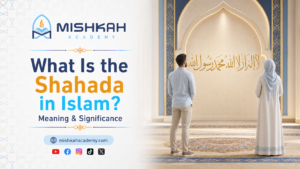
The Shahada is the first of the Five Pillars of Islam and the gateway into the faith. It consists of two statements:
لَا إِلٰهَ إِلَّا اللَّهُ مُحَمَّدٌ رَسُولُ اللَّهِ
| Transliteration: Lā ilāha illā Allāh, Muḥammadun rasūlu Allāh
Translation: “There is no god worthy of worship except Allah, and Muhammad is the Messenger of Allah.” |
The first part — “There is no god but Allah” — is a complete negation of all false deities and an exclusive affirmation of Allah’s unique divinity. The second part — “Muhammad is the Messenger of Allah” — commits you to following his example and teachings.
You can recite the Shahada in English first if Arabic pronunciation is challenging. The sincere meaning is what matters to Allah. Over time, learning the Arabic is deeply rewarding and encouraged.
How to Become a Muslim: Step-by-Step
Step 1: Reflect and Understand Your Intention (Niyyah)
Before anything else, be honest with yourself about why you want to become Muslim. The Prophet ﷺ said: “Actions are judged by intentions, and every person will have only what they intended.” (Sahih al-Bukhari, 1)
Are you drawn to Islam because you genuinely believe it is truth? Or because of a relationship, social pressure, or curiosity? The former is the right foundation. A sincere Niyyah (intention) will sustain you through every challenge ahead.
Step 2: Learn the Core Belief: Tawhid (Oneness of Allah)
Islam’s most fundamental belief is Tawhid — the absolute oneness of God. Allah has no partners, children, or equals. He was not born and does not die. He alone created and sustains the universe.
“Say: He is Allah, the One. Allah, the Eternal Refuge. He neither begets nor is born, nor is there to Him any equivalent.” (Quran, Surah Al-Ikhlas 112:1–4)
You do not need to master all of Islamic theology before converting — but this foundational belief must be genuinely held.
Step 3: Recite the Shahada with Sincere Conviction
Sit or stand quietly. Calm your heart. Recite the Shahada — in Arabic or English — with complete sincerity. At this precise moment, you become a Muslim. Every sin you have ever committed is completely forgiven.
“Islam annuls what came before it.” — The Prophet Muhammad ﷺ (Sahih Muslim, 121)
Step 4: Perform Ghusl — The Purification Bath
After taking the Shahada, perform Ghusl — a complete ritual shower — as an act of spiritual purification. This symbolises the complete washing away of your past and the fresh beginning of your new Muslim life. It is obligatory according to the majority of Islamic scholars.
Step 5: Begin Learning the Five Daily Prayers (Salah)
Salah — the five daily prayers — is the most important ongoing obligation in Islam. Muslims pray at dawn (Fajr), midday (Dhuhr), afternoon (Asr), sunset (Maghrib), and night (Isha). Start by learning the basics gradually. Nobody expects perfection from a new Muslim immediately. Progress is what matters.
Step 6: Connect with the Muslim Community
Find a local mosque (masjid) or Islamic center when you feel ready. Muslim communities almost universally welcome new converts with warmth and are eager to help. If you are in a remote area, online communities and platforms like Mishkah Academy provide equally strong support.
Step 7: Begin Structured Islamic Learning
Systematic learning is what separates converts who thrive from those who struggle. Enroll in a structured New Muslim course that covers Islamic creed (Aqeedah), prayer (Salah), Quran recitation, and Islamic lifestyle. Mishkah Academy’s New Muslim Converts Course and New Shahada Classes are designed precisely for this journey.
| 📚 Mishkah Academy — New Shahada Classes
Certified Egyptian scholars guide you through every step immediately after your Shahada — in English, 1-on-1, at your pace. |
Benefits of Becoming a Muslim
People embrace Islam for many different reasons. Among the most meaningful benefits commonly described are:
- Inner peace and a clear purpose in life—understanding why you were created and where your journey leads.
- A completely new beginning: sincerely accepting Islam wipes away all previous sins.
- A direct relationship with Allah, without priests or intermediaries.
- A balanced moral framework that guides worship, family life, relationships, work, and personal conduct.
- Belonging to a diverse worldwide community of Muslims from every race, culture, and nationality.
- Spiritual discipline through the five daily prayers, providing regular moments of reflection and connection with Allah.
- Hope, patience, gratitude, and strength during both ease and hardship.
- The promise of Paradise for those who sincerely believe, worship Allah alone, perform righteous deeds, and die upon faith.
- Access to the Quran, preserved and memorized by Muslims throughout the centuries, which invites people to reflect on creation, history, morality, and the meaning of life.
The Quran encourages thoughtful reflection on the natural world. Some readers find its descriptions of creation, human development, the heavens, and the seas especially meaningful. Such passages are best approached carefully—as signs that encourage faith and contemplation, rather than as substitutes for scientific textbooks.
How to Grow in Your Faith After Becoming Muslim
The Shahada opens the door. What you do next determines the depth and richness of your Muslim life. Here are the most important investments a new Muslim can make:
| Priority | How to Do It |
| Learn to pray correctly | Enroll in structured Salah classes. Get the movements, timings, and Arabic recitations right from the start. Bad habits are hard to break later. |
| Read the Quran daily | Start with a translation in your language. Even 5 minutes of Quran reading daily builds a profound connection to Allah over time. |
| Learn Arabic | Even basic Arabic changes your relationship to Islam entirely. You can understand what you are reciting in prayer. Mishkah offers Arabic courses from absolute beginner level. |
| Study Islamic creed | Enroll in an Aqeedah (creed) course to understand the Six Articles of Faith in depth. This protects your faith from doubt and confusion. |
| Make dhikr (remembrance) | Simple phrases like SubhanAllah, Alhamdulillah, and Allahu Akbar — said with awareness — transform ordinary moments into acts of worship. |
| Find a mentor or teacher | The fastest path to growth is learning from someone more knowledgeable. A qualified teacher corrects mistakes early and answers questions accurately. |
| Be patient with yourself | You will not be a perfect Muslim in a year. Aim for consistent improvement, not perfection. Allah rewards effort and sincerity above all. |
Finding Your Muslim Community
One of the greatest gifts of becoming Muslim is the global community (Ummah) you instantly join. The Quran describes believers as: “Indeed the believers are but brothers.” (Quran 49:10). Finding community accelerates learning, provides emotional support, and makes the journey far more joyful.
- Visit your local mosque — most mosques have dedicated New Muslim programs or can connect you with a mentor
- Search for convert support groups in your city — they exist in most major Western cities
- Use Islamic Finder to locate mosques near you
- Join online Muslim communities for English-speaking converts
- Enroll in live 1-on-1 classes with Mishkah Academy — you will learn alongside scholars who genuinely care about your journey
| 🕌 Find a Mosque Near You
Find mosques, Islamic centers, and Muslim communities near you → |
A Special Note for Women Becoming Muslim
Women make up the majority of converts to Islam in Western countries — over 60% in the UK according to some estimates. Many women who become Muslim describe finding a sense of spiritual dignity, clarity of purpose, and community that they had not experienced before.
| Common Questions from Women Considering Islam:
Q: Do I have to wear hijab immediately? A: No. Hijab is an obligation in Islam, but new Muslim women are encouraged to grow into it at a pace that allows genuine faith to develop. Many women adopt it gradually. Q: Can I convert during my period? A: Yes. You can say the Shahada during menstruation. You simply begin praying after your period ends. Q: Is Islam oppressive to women? A: This is a common misconception. Islam was the first major religion to give women explicit legal rights — to own property, to inherit, to choose their own spouse, to keep their name after marriage. The Prophet ﷺ said: “The best of you are those who are best to their wives.” (Tirmidhi) Q: Do I need a male guardian (Wali) to convert? A: No. A woman can take her Shahada independently, without any male permission or presence. Q: Can I access female-only classes? A: Yes. Mishkah Academy offers female teachers for all courses. All lessons are private 1-on-1 with a female scholar if you prefer. |
| 💡 Mishkah Tip: Mishkah Academy’s New Muslim Converts Course teaches you all basics in English with a certified teachers.
|
How Many People Become Muslim Each Year?
The decision you are considering is one being made by thousands of people across the world every year:
- Islam grew by 347 million people between 2010 and 2020, reaching 2.0 billion total — growing twice as fast as the world population (Pew Research, 2025)
- In the United States, an estimated 20,000–30,000 people convert to Islam annually
- In the United Kingdom, approximately 5,000 people become Muslim each year — over 60% of them women
- Islam is on track to become the world’s largest religion in the second half of this century (Pew Research, 2015 projection)
Frequently Asked Questions
Q: Can I become Muslim on my own without going to a mosque?
A: Yes, completely. The Shahada is valid when said sincerely alone. However, connecting with a mosque or Islamic community is strongly recommended for the support and guidance they provide.
Q: Do I need to learn Arabic before becoming Muslim?
A: No. You can recite the Shahada in English. Arabic comes gradually — and it is one of the most rewarding aspects of the journey.
Q: Is becoming Muslim a permanent decision?
A: From an Islamic perspective, yes — Islam is a lifelong commitment. However, you begin with just the Shahada and grow from there. Islam is patient with human imperfection.
Q: What is the first thing I should do after becoming Muslim?
A: Perform Ghusl (ritual purification bath), then begin learning how to perform the five daily prayers. These are your most immediate priorities.
Q: How do I tell my non-Muslim family I have become Muslim?
A: There is no obligation to tell them immediately. When you do, choose a calm moment, be patient with their reactions, and focus on demonstrating the positive change Islam brings to your character. Many families come to accept and even respect the decision over time.
Q: What if I have doubts after converting?
A: Doubts are a normal part of faith for almost every Muslim. The Quran addresses this directly. Seek knowledge — doubts most often arise from lack of information. Speaking with a knowledgeable scholar usually resolves them. Mishkah Academy teachers are experienced in supporting new Muslims through periods of doubt.
Q: Is there a “right time” to become Muslim?
A: The Prophet ﷺ urged people not to delay once they sincerely believe. Life is uncertain — we do not know when it will end. If you believe Islam is true, the right time is now.
Q: Can I become Muslim if I have a complicated past?
A: Absolutely. All past sins are completely forgiven at the moment of conversion. Islam explicitly welcomes people of every background. “Say: O My servants who have transgressed against themselves, do not despair of the mercy of Allah. Indeed, Allah forgives all sins.” (Quran 39:53)
Begin Your Muslim Journey with Mishkah Academy
Becoming Muslim is the most profound decision a person can make. It is also the beginning of a journey that requires knowledge, community, and consistent support. Mishkah Academy has helped hundreds of new Muslims from the USA, UK, Canada, and Australia build a solid foundation of faith — and we are here for you.
- New Shahada Classes — immediate 1-on-1 support right after your Shahada
- New Muslim Converts Course — complete beginner curriculum in English
- How to Make Shahada — guided support to take your declaration of faith
- How to Become a Muslim — further resources and personal guidance
- Free Trial Class — begin with zero commitment
🕌 Start Your Free Trial Class Today — Zero Commitment
|