
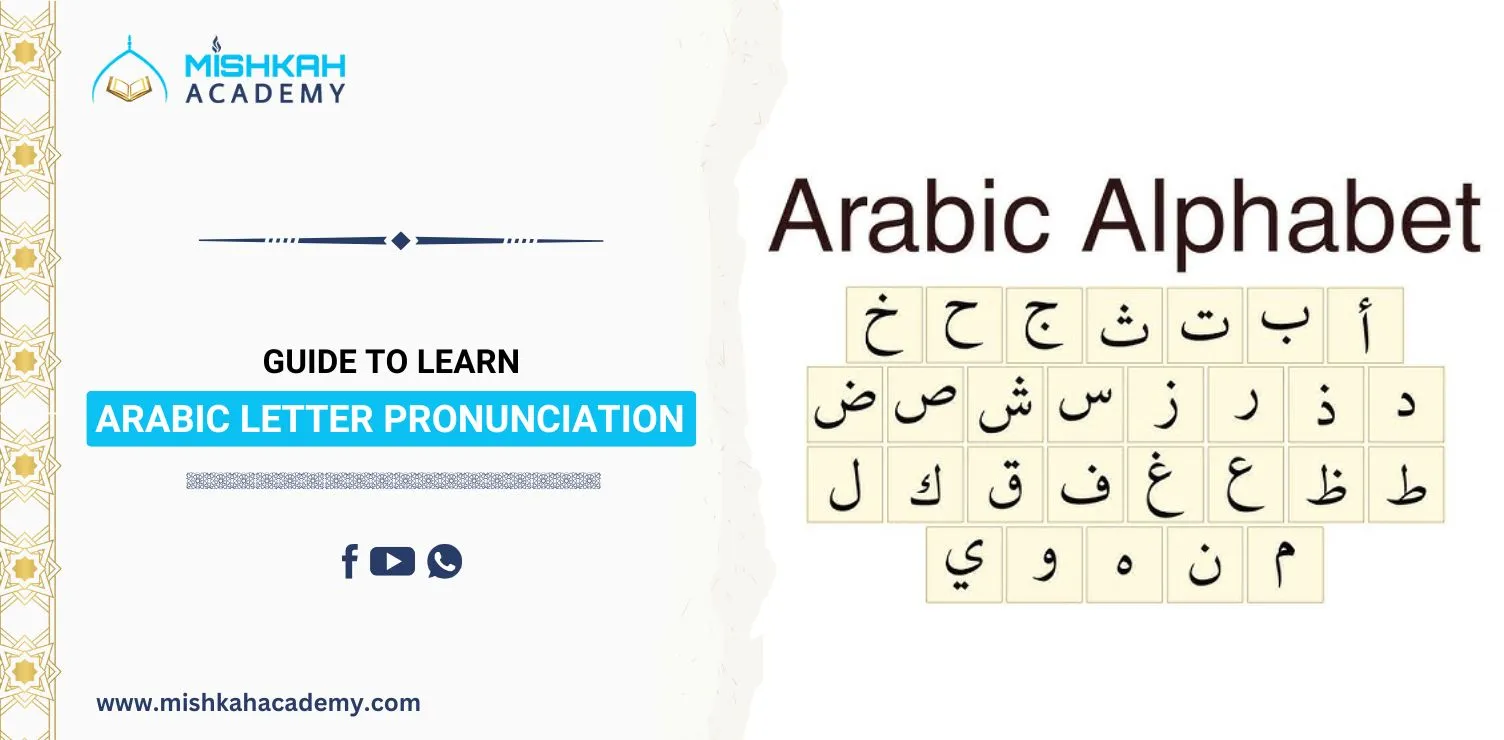
Tajweed rules ensure that each Arabic letter is spoken from its correct point of articulation, maintaining the beauty and accuracy of Quranic recitation. Surah Al-Muzzammil (Chapter 73) reminds believers of the importance of reciting the Quran correctly — “And recite the Quran with measured recitation” (73:4). This verse highlights that proper pronunciation is not only about reading but about preserving the original sound and meaning of Allah’s words.
To pronounce Arabic letters with Tajweed, learn their Makhraj (origin point) and Sifaat (qualities). Each letter comes from a specific part of the mouth or throat. Practice slowly, listen to expert reciters, and use visual Tajweed charts to perfect your pronunciation. Consistent daily recitation strengthens accuracy and fluency.
What is Tajweed and Why It Matters
Table of Contents
ToggleTajweed means “to make better” or “to improve.” In Quranic recitation, it refers to the precise set of quran reading rules that guide how every Arabic letter is pronounced. These rules ensure that the Quran is recited exactly as it was revealed to Prophet Muhammad ﷺ. Tajweed involves correct pronunciation, proper stretching of sounds, and maintaining clarity between similar letters. It protects the words of Allah from distortion and keeps their original beauty intact.
What Are Makharij
Makharij (plural of Makhraj) are the specific points in the mouth, throat, or nose from which Arabic letters are produced. Think of each letter as having its own “home.” When that letter is pronounced, the sound begins or ends at that home point.
Learning the makhraj of each letter helps a learner pronounce it exactly as native Arabs did at the time of revelation. Without knowing makharij letters often blend or lose their proper sound.
The Six Main Articulation Zones
All Arabic letters come from 17 specific makharij, grouped into six major zones:
- The Throat (Halaq): For letters like ع، ح، غ، خ، هـ، ء.
- The Tongue: The largest zone; produces most letters like ت، د، ط، ر، ل، ن، س، ش، ص، ز.
- The Lips: Used for ب، م، ف، و.
- The Nose: Handles nasalization (Ghunna) in م and ن.
- The Mouth: Assists in echoing and sound release.
- The Chest: Origin of vowel sounds that carry voice vibration.
Understanding these zones is the foundation for mastering Tajweed, because each letter’s uniqueness lies in where it comes from and how it exits.
Note: Enroll in the Mishkah Academy Advanced Tajweed course to learn Arabic Letters with proper Tajweed with expert Egyptian Tajweed tutors.
Start Your Tajweed Learning Journey Today
The Arabic Alphabet – Basic Pronunciation Overview
Vowels and Consonants
Arabic has 28 consonant letters and 3 vowel sounds (short and long).
- Short vowels:
- Fatha (ــَ) – a short “a” sound like cat.
- Kasra (ــِ) – a short “i” sound like sit.
- Damma (ــُ) – a short “u” sound like put.
- Long vowels (Madd):
- ا (Alif) = “aa”, ي (Ya) = “ee”, و (Waw) = “oo”.
Every letter connects with these vowels differently. Correct control of these vowels helps avoid mixing words or changing meaning.
Common Beginner Pitfalls
Beginners often make mistakes such as:
- Mixing س (Seen) with ص (Saad) due to unclear tongue placement.
- Reading ق (Qaf) too softly like ك (Kaf).
- Overemphasizing ر (Ra) even when it should be light.
- Ignoring ghunna (nasal sound) in م and ن.
These small pronunciation slips can distort meaning, which is why learning under a qualified teacher is always recommended.
Light (Murraqaqa) vs Heavy (Mufakhkhama) Letters
What Makes a Letter “Heavy”
Arabic letters can be either light or heavy.
- Light (Murraqaqa) letters are pronounced with a flat tongue and no back-of-mouth pressure.
- Heavy (Mufakhkhama) letters are pronounced with the tongue raised toward the roof of the mouth, producing a deep “thick” sound.
There are seven heavy letters, known as خُصَّ ضَغَطٍ قِظ:
خ، ص، ض، غ، ط، ق، ظ
Examples and Comparison
Compare these examples:
- س (Seen) vs ص (Saad): Sin is light; Saad is heavy and deeper.
- ك (Kaf) vs ق (Qaf): Kaf is from the middle tongue; Qaf from the back — producing a stronger echo.
- ر (Ra): It can be light or heavy depending on surrounding vowels.
Practicing minimal pairs helps learners quickly feel the difference. For instance, saying qalb (heart) vs kalb (dog) — one letter difference changes the entire meaning.
Letter-by-Letter Guide with Makharij & Pronunciation
| Letter | Name (Transliteration) | Makhraj (Articulation Point) | How to Pronounce (Simple Description) |
| أ | Alif | Deep throat | Open mouth slightly, release air freely like “aa.” |
| ب | Ba | Lips meet gently | Press lips together lightly; sound comes from lips. |
| ت | Ta | Tip of tongue with upper front teeth | Soft “t” sound, quick and clear. |
| ث | Tha | Tip of tongue between teeth | Like English “th” in “think.” |
| ج | Jeem | Middle of tongue with palate | Blend “j” and soft “zh” sound. |
| ح | Ha (soft) | Middle throat | Breathe out softly; no vibration. |
| خ | Kha | Upper throat | Harsh “kh” like clearing throat. |
| د | Dal | Tip of tongue with upper teeth | Like English “d,” quick tap. |
| ذ | Dhal | Tip of tongue between teeth | Like “th” in “this.” |
| ر | Ra | Tip of tongue near gum | Roll slightly once, not continuously. |
| ز | Zay | Tip of tongue near teeth | Like “z” in “zebra.” |
| س | Seen | Tip of tongue near gums | Like “s” in “see.” |
| ش | Sheen | Middle tongue near palate | Say “sh” as in “shoe.” |
| ص | Saad | Tongue raised back | Heavy “s,” with deep tone. |
| ض | Dhad | Side of tongue with upper molars | Press side of tongue; deep and unique Arabic sound. |
| ط | Taa | Tongue pressed upward | Strong “t,” pronounced from deeper tongue. |
| ظ | Zha | Tip of tongue between teeth | Heavy “th” sound; thicker tone. |
| ع | Ain | Deep throat | Contract throat slightly; air vibrates softly. |
| غ | Ghayn | Upper throat | Strong “gh” sound, like French “r.” |
| ف | Fa | Upper teeth with lower lip | Like “f” in “fun.” |
| ق | Qaf | Back of tongue with soft palate | Deep, powerful “k” sound. |
| ك | Kaf | Back of tongue with roof | Lighter “k,” less echo. |
| ل | Lam | Tongue touches upper gums | Smooth “l,” no heaviness. |
| م | Meem | Lips closed, nasal vibration | Like “m” in “man.” |
| ن | Noon | Tip of tongue, nasal sound | Like “n” in “nose.” |
| هـ | Ha | Throat opening | Soft breathy “h.” |
| و | Waw | Lips rounded | Like “w” in “wow.” |
| ي | Ya | Middle tongue | Like “y” in “yes.” |
Common Pronunciation Errors and How to Fix Them
Mistakes with Heavy Letters
One of the most common struggles in Tajweed is mispronouncing heavy (mufakhkhama) letters. Learners often flatten their sound or exaggerate it too much. Both are incorrect.
Common mistakes include:
- Pronouncing ص (Saad) like س (Seen) — missing the deep, thick tone.
- Softening ق (Qaf) so it sounds like ك (Kaf).
- Over-rolling ر (Ra) in every case, even when it should remain light.
Fixes:
- Keep the back of your tongue raised for heavy letters and relax it for light ones.
- Practice with pairs such as صبر (Sabr) vs سبر (Sibr) to hear the contrast.
- Record your recitation and compare it with a Qari (expert reciter).
- Watch your mouth position in a mirror; you’ll feel heaviness come from the throat and tongue base, not the lips.
A quick rule: If the sound echoes in your chest and throat, you’re producing it correctly. If it stays only near your teeth, it’s too light.
Start Your Tajweed Learning Journey Today
Mistakes with Makhraj Points
Another major challenge is misplacing the tongue or lips. Each letter has its exact exit point. If you shift it even slightly, the letter changes.
Frequent errors include:
- Pronouncing ض (Dhad) from the tip of the tongue instead of the side.
- Saying ع (Ain) too softly — missing its throat origin.
- Confusing ذ (Dhal) with ز (Zay) or د (Dal) due to tongue misplacement.
Corrections:
- Learn the physical feel of every makhraj — use visual charts or apps showing tongue placement.
- Practice slow, deliberate pronunciation before speeding up.
- Try the “tissue test”: if air moves the tissue when pronouncing ف (Fa) or ث (Tha), your air release is correct.
Consistency matters more than speed; once makhraj accuracy is built, fluency follows naturally.
Applying Pronunciation in Qur’anic Recitation
Transition from Single Letters to Words
After mastering individual letters, the next step is joining them into syllables and words. Start with short Quranic words like قل، رب، حق.
- Focus on one rule at a time — e.g., heavy letters in قلب or throat letters in خلق.
- Repeat each word 5–10 times, keeping makhraj and heaviness intact.
This builds rhythm, clarity, and muscle memory for continuous recitation.
Maintaining Correct Makhraj under Verses and Speed
Once you start reading verses, accuracy often drops due to rhythm or haste. To stay precise:
- Slow down: Tajweed is about quality, not speed.
- Use controlled breathing: Pause naturally where the verse allows.
- Record and review: Compare your recitation to a reliable Qari.
- Set a pattern: 5 minutes of letter drills, then 10 minutes of verse recitation daily.
As fluency grows, pronunciation becomes effortless, allowing true tarteel — calm, measured, and beautiful Quranic recitation.
Importance In Qur’anic Recitation
The Quran was revealed in Arabic, and every letter holds meaning. Incorrect pronunciation can change that meaning entirely. For example, confusing ض (Dhad) with ظ (Zha) can alter the word’s interpretation. Practicing Tajweed fulfills Allah’s command in Surah Al-Muzzammil (73:4) — “And recite the Quran with measured recitation.” It deepens understanding, brings khushu‘ (focus) in prayer, and connects reciters to the authentic recitation tradition of the Prophet ﷺ.
Final Words
Mastering the pronunciation of Arabic letters with Tajweed is a lifelong skill that transforms how you connect with the Quran. With steady practice and the right guidance, every letter becomes clearer, every verse more beautiful.
To build strong Tajweed foundations and correct articulation under expert tutors, join Mishkah Academy’s online Tajweed course. Their structured lessons and personalized support make learning effortless and spiritually rewarding, helping you recite the Quran as it was revealed — perfectly and confidently.