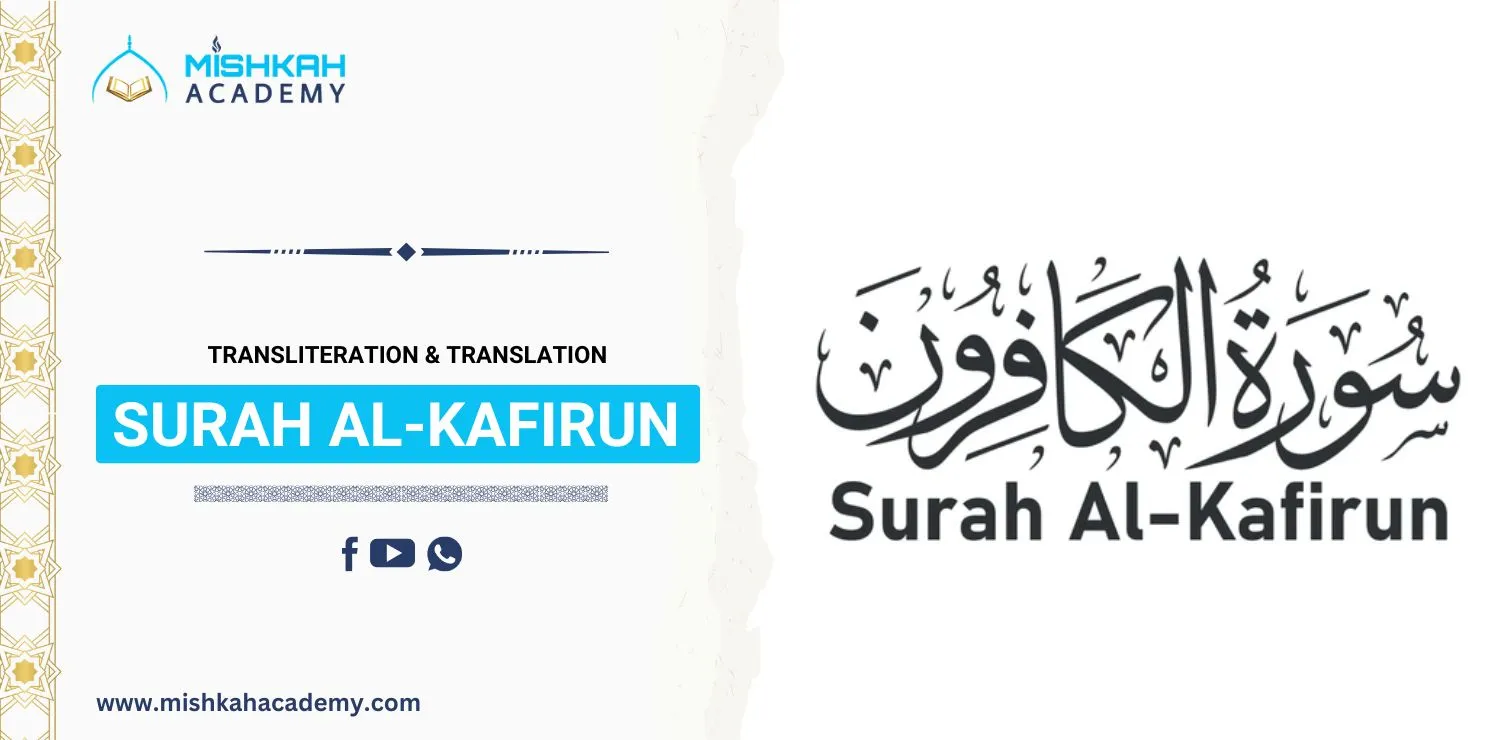
Surah Al-Kafirun is the 109th chapter of the Quran. It has 6 short verses and was revealed in Makkah. This Surah firmly separates the beliefs of Islam from disbelief. It teaches Muslims to stay strong in their faith and not mix truth with falsehood.
The word “Kafirun” means “disbelievers,” and the Surah speaks directly to them. It reminds us that worship is only for Allah and should never be shared. Surah Al-Kafirun is often recited in daily prayers for its powerful message of Tawheed (oneness of Allah).
In simple words, this Surah means: You have your way, and I have mine. I will never worship what you worship. It shows clear refusal to compromise in matters of religion, making it a strong declaration of Islamic belief.
Surah Al-Kafirun (Arabic Text)
Table of Contents
Toggleبِسْمِ اللَّهِ الرَّحْمَٰنِ الرَّحِيمِ
قُلْ يَا أَيُّهَا الْكَافِرُونَ
لَا أَعْبُدُ مَا تَعْبُدُونَ
وَلَا أَنتُمْ عَابِدُونَ مَا أَعْبُدُ
وَلَا أَنَا عَابِدٌ مَّا عَبَدتُّمْ
وَلَا أَنتُمْ عَابِدُونَ مَا أَعْبُدُ
لَكُمْ دِينُكُمْ وَلِيَ دِينِ
Surah Al-Kafirun (Transliteration)
Qul ya ayyuhal-kafirun
Laa a’budu maa ta’budoon
Wa laa antum ‘aabidoona maa a’bud
Wa laa ana ‘aabidum maa ‘abadtum
Wa laa antum ‘aabidoona maa a’bud
Lakum deenukum wa liya deen
Surah Al-Kafirun (English Translation)
Say, “O disbelievers,
I do not worship what you worship.
Nor are you worshippers of what I worship.
Nor will I be a worshipper of what you worship.
Nor will you be worshippers of what I worship.
For you is your religion, and for me is my religion.”
What is the Meaning of Surah Al-Kafirun?
Surah Al-Kafirun is a powerful declaration of Islamic belief and a direct response to the idol-worshippers of Makkah. Revealed in a time when the Prophet Muhammad ﷺ was under pressure to compromise in matters of faith, this Surah firmly rejected all forms of religious mixing or negotiation. It consists of six short verses, yet each line carries a deep, timeless message. Let us explore each verse in detail, just as classical scholars like Ibn Kathir, Al-Qurtubi, and others have done.
Note: Mishkah Academy teaches about Surah Al-Inshirah in detail and how to recite and with proper meanings in its “Online quran recitation classes”
Verse 1: قُلْ يَا أَيُّهَا الْكَافِرُونَ
Translation: Say, O disbelievers!
Meaning:
The Surah opens with the word “Qul” — “Say”, a command from Allah ﷻ to the Prophet Muhammad ﷺ. It emphasizes that this message is not personal opinion, but direct divine revelation.
The word “Al-Kafirun” comes from the root K-F-R, which means to cover or to hide. In Islamic terms, a kafir is someone who rejects or covers the truth after it has come to them. Here, it is addressed to the leaders of Quraysh who denied Allah and His Messenger.
This verse sets a clear tone: the conversation is not one of debate but of finality.
Verse 2: لَا أَعْبُدُ مَا تَعْبُدُونَ
Translation: I do not worship what you worship.
Meaning:
This is a direct refusal. The Prophet ﷺ declares that he does not and will never worship what the disbelievers worship — meaning the idols, statues, or false gods.
It also reflects the core of Tawheed (the oneness of Allah). Worship in Islam is not merely about physical acts; it includes devotion, love, fear, hope, and complete surrender. None of these can be directed to anything besides Allah.
Verse 3: وَلَا أَنتُمْ عَابِدُونَ مَا أَعْبُدُ
Transliteration: Wa laa antum ‘aabidoona maa a’bud
Translation: Nor are you worshippers of what I worship.
Meaning:
The disbelievers may have claimed outward worship of Allah, but this verse declares that their worship is not accepted, because it is mixed with shirk (associating partners with Allah).
As stated in the Qur’an (Surah Az-Zumar 39:65):
“If you were to associate [with Allah], your work would surely become worthless.”
Their rejection of the Prophet and their insistence on idol worship made their actions void, even if they spoke the name of Allah.
Verse 4: وَلَا أَنَا عَابِدٌ مَّا عَبَدتُّمْ
Translation: Nor will I ever worship what you worship.
Meaning:
This line may sound repetitive, but in Arabic, repetition serves emphasis and clarity. The first time he says “I do not worship…”, he refers to the present. Now, with “nor will I…”, it refers to the future — meaning the Prophet ﷺ is making a permanent stance.
There will never be a time, not even in the future, when he or any believer will bow to false gods. This is the complete severing of any religious compromise.
Verse 5: وَلَا أَنتُمْ عَابِدُونَ مَا أَعْبُدُ
Translation: Nor will you ever worship what I worship.
Meaning:
Again, this emphasizes permanent disconnection. The idolaters were not truly devoted to Allah, nor would they be in the future — because of their stubbornness and pride. As the Qur’an says in Surah Al-A’raf (7:146):
“I will turn away from My signs those who are arrogant upon the earth without right.”
Some scholars also say this repetition silences the idea of “compromise”, where the Quraysh leaders once proposed that Muslims worship their gods for a year and then they would worship Allah for a year. This Surah shuts that offer down completely.
Verse 6: لَكُمْ دِينُكُمْ وَلِيَ دِينِ
Translation: To you is your religion, and to me is mine.
Meaning:
This final verse declares religious independence. Islam is a pure, distinct path, separate from disbelief. The Prophet ﷺ is saying: “You follow your way; I follow mine.”
It is not a statement of approval of disbelief, but a final rejection. Islam does not share space with shirk. As mentioned in Sahih Muslim, the Prophet ﷺ used to recite Surah Al-Kafirun in Sunnah prayers of Fajr and Maghrib, showing how deeply this Surah connects to sincerity in worship.
Benefits of Surah Al-Kafirun (Importance)
- It teaches Muslims to stay firm in their faith and never compromise with false beliefs.
- The Surah protects one’s heart from shirk (associating partners with Allah).
- Reciting it reminds us that worship is only for Allah and no one else.
- It helps build strong belief in Tawheed (Oneness of Allah).
- The Prophet ﷺ used to recite this Surah in Sunnah prayers, showing its special status.
- It draws a clear line between truth and falsehood in religion.
- Reciting it regularly strengthens your intention to worship Allah alone.
- It offers spiritual protection from being influenced by disbelief.
- It is a declaration of loyalty to Allah and rejection of all false gods.
Final Words
Surah Al-Kafirun is a powerful chapter that teaches the value of standing firm in one’s faith. It clearly separates the truth of Islam from disbelief and leaves no room for mixing beliefs. This Surah reminds every Muslim that worship is only for Allah and must remain pure and sincere. It’s not just a declaration—it’s a way of life.
To learn the deep meaning and correct recitation of Surah Al-Kafirun and other Surahs with Mishkah Academy egyptian Quran teachers online. Start your journey of understanding the Quran with trusted guidance from Mishkah Academy today.