
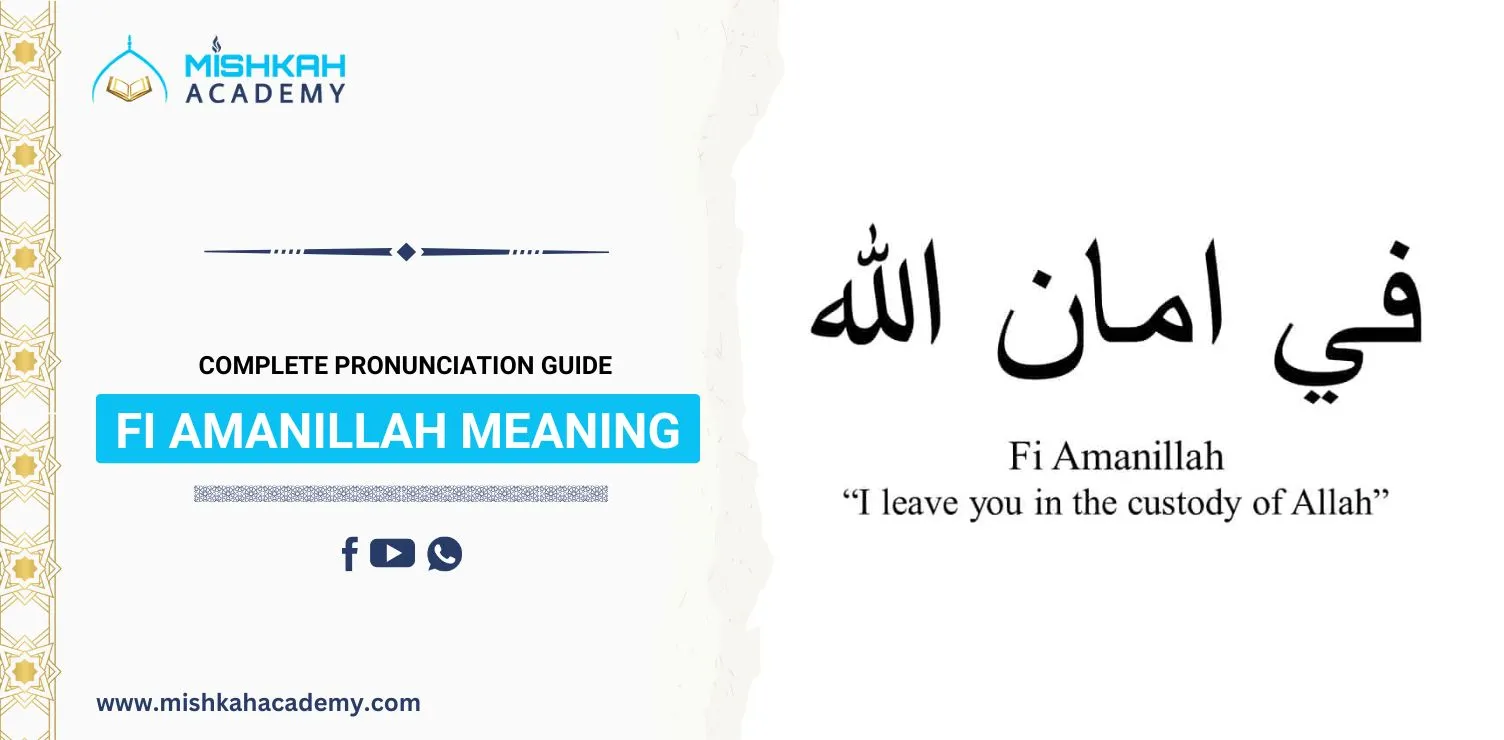
Muslims often say “Fi Amanillah” when saying goodbye to someone they care about. It is common after a meeting, a visit, or even a short talk. This phrase is from the Arabic language and holds a deep Islamic meaning. It means “In the protection of Allah” or “May Allah keep you safe.”
Muslims use it as a kind and heartfelt way to send someone off with prayers for their safety and well-being. The words remind both the speaker and listener that Allah’s protection is the best safeguard in life. In this article, we will explore the exact meaning, origin, and proper use of “Fi Amanillah,” along with its spiritual value in daily life.
What is the Meaning of Fi Amanillah?
Table of Contents
Toggle“Fī Amānillāh” (فِي أَمَانِ ٱللَّهِ) means “in the protection of Allah.” People say it at farewell moments: ending a visit, leaving for a trip, or closing a phone call. It is not just “goodbye.” It is a short dua. You are placing the other person under Allah’s care and safety.
The phrase is warm, respectful, and faith-centered. It fits personal and formal settings. You can say it to friends, family, elders, and teachers. It brings comfort, reminds hearts of Allah, and keeps the parting noble. Think of it as: “I send you off with a prayer, not only a phrase.”
Arabic, Transliteration, and Pronunciation
Arabic: فِي أَمَانِ ٱللَّهِ
Common transliterations: Fi Amanillah, Fī Amānillāh, Fee Amanullah.
Easy say-it guide: fee a-maa-ni-llāh.
Stretch the long ī in fī and the long ā in amān. Link amāni with llāh smoothly, so it sounds like one flow: amāni-llāh. Keep the final h soft, not dropped. Speak gently, since it is a dua.
Notes on spelling: You may see “Amaan,” “Aman,” or “Amaanullah.”
Meanings stay the same. Using the version with marks (Fī Amānillāh) helps learners notice the long vowels. For English readers, “Fi Amanillah” is the clearest, search-friendly choice.
Word-by-Word Breakdown (Fi + Amaan + Allah)
This phrase is short yet rich. It has a preposition, a noun, and the Name of Allah in a possessive link (iḍāfah). Fī places something “in/within.” Amān means safety, security, protection. Joined with “Allah,” it becomes “the protection of Allah.”
Because of fī, the word that follows appears in the “genitive” form (amāni). Then it links to Allāh, giving the full meaning: being inside Allah’s protective care. The structure is simple, natural, and easy to use in daily speech.
| Element | Arabic | Meaning | Quick Note | Pronunciation |
| Preposition | فِي (fī) | in/within | Sets place/state | fee |
| Noun (iḍāfah) | أَمَانِ (amāni) | protection/safety | Linked to Allah | a-maa-ni |
| Divine Name | ٱللَّهِ (Allāh) | Allah (God) | Final soft h | al-lāh |
| Full Sense | فِي أَمَانِ ٱللَّهِ | in Allah’s protection | A short dua | fee a-maa-ni-llāh |
Note: Mishkah Academy teaches about important Arabic words in detail and how to pronounce with proper meanings in its “Online Arabic conversation course”
Book Free Trial Class Now
How to Reply to Fi Amanillah (Male/Female/Dialect Options)
The best mirror reply is the same dua back.
- To a male: وَأَنْتَ فِي أَمَانِ اللَّهِ — wa anta fī amānillāh (“And you be in Allah’s protection”).
- To a female: وَأَنْتِ فِي أَمَانِ اللَّهِ — wa anti fī amānillāh.
- To a group: وَأَنْتُمْ فِي أَمَانِ اللَّهِ — wa antum fī amānillāh.
Polite alternatives: جَزَاكَ/جَزَاكِ اللَّهُ خَيْرًا (jazāk/jazāki llāhu khayran), بَارَكَ اللَّهُ فِيكَ/فِيكِ (bārakallāhu fīk/fīki), or مَعَ السَّلَامَة (maʿa as-salāmah).
Dialect-friendly options used in daily talk: اللَّه مَعَك/مَعِك (Allāh maʿak/maʿik, Levant), رَبِّنَا مَعَاك (Rabbina maʿāk, Egypt). Keep tone kind and steady. Add a short dua if fitting, like “Safe journey.”
Related Phrases and Differences of Fi Amanillah
- فِي حِفْظِ اللَّهِ (fī ḥifẓillāh) — “in Allah’s safeguarding.” Close in meaning; adds a sense of careful guarding.
- فِي ذِمَّةِ اللَّهِ (fī dhimmatillāh) — “under Allah’s guarantee.” Feels formal and classical.
- اللّٰه حَافِظ (Allah Hafiz) — common in South Asia; same intent as a farewell dua.
- اسْتَوْدِعُكَ اللَّهَ (astawdiʿuka Allāh) — “I entrust you to Allah.” Often used for travel or longer separations.
- مَعَ السَّلَامَة (maʿa as-salāmah) — general “go in peace.”
Nuance: Fī Amānillāh is the most neutral and widely understood. Fī ḥifẓillāh stresses preservation; fī dhimmatillāh hints at divine guarantee; Allah Hafiz is culturally familiar in Urdu-speaking spaces. Choose what suits the audience and moment.
Fi Amanillah Etiquette and Common Mistakes
“Fī Amānillāh” is more than a phrase—it is a prayer for safety. This means it should always be spoken with sincerity and respect. Treat it as a heartfelt dua, not casual slang. Your tone should be gentle, your pronunciation clear, and your intention pure.
The reply should match the person you’re speaking to, and the phrase should flow naturally without breaking its rhythm. Even with spelling variations in English, the meaning remains unchanged. It can also be shared with non-Muslims if they understand it as a kind wish.
Key etiquette and common mistakes to avoid:
- Use with sincerity – Never as sarcasm or a joke.
- Match gender/number – wa anta (male), wa anti (female), wa antum (group).
- Speak gently – Avoid rushed or harsh tones.
- Accept spelling shifts – Fi/Fee or Aman/Amaan mean the same.
- Share respectfully – Fine for non-Muslims if explained as a prayer.
- Add a dua in sensitive moments – For comfort and blessing.
Short Duas to Pair With It
Pair Fī Amānillāh with one short line that fits the moment:
- اللَّهُمَّ احْفَظْهُ/احْفَظْهَا — Allāhumma iḥfaẓhu/iḥfaẓhā (O Allah, protect him/her).
- اللَّهُمَّ يَسِّرْ لَهُ/لَهَا — Allāhumma yassir lahu/lahā (O Allah, make it easy for him/her).
- اللَّهُمَّ قِنَا الشَّرَّ — Allāhumma qinā ash-sharr (O Allah, keep us safe from harm).
- تَصْحَبُكُمُ السَّلَامَة — taṣḥabukum as-salāmah (May safety accompany you).
- فِي رِعَايَةِ اللَّهِ — fī riʿāyatillāh (In Allah’s care).
Use one clear line. Keep it short and heartfelt. These add warmth, show real concern, and strengthen the meaning of the farewell.
How do I respond to “Fi Amanillah”?
Best reply: وَأَنْتَ فِي أَمَانِ اللَّهِ (wa anta fī amānillāh) to a male, or وَأَنْتِ فِي أَمَانِ اللَّهِ (wa anti fī amānillāh) to a female—“and you be in Allah’s protection.” You can also say جَزَاكَ اللَّهُ خَيْرًا (jazākallāhu khayran), بَارَكَ اللَّهُ فِيكَ/فِيكِ (bārakallāhu fīk/fīki), or a neutral farewell like مَعَ السَّلَامَة (maʿa as-salāmah).
Keep tone warm and sincere; add a short dua if fitting (e.g., “Have a safe trip”). These responses mirror how Arabic speakers close calls, visits, or departures with a prayer for safety, not just a social sign-off.
How do you say “I leave you in the care of Allah”?
Say فِي أَمَانِ اللَّهِ (fī amānillāh)—literally “in Allah’s protection.” It’s a short dua used at parting: after a visit, at the airport, or when ending a call. You may also hear فِي حِفْظِ اللَّهِ (fī ḥifẓillāh, “in Allah’s safeguarding”) or فِي ذِمَّةِ اللَّهِ (fī dhimmatillāh, “under Allah’s guarantee”); all convey entrusting someone to Allah’s care.
In South Asian contexts, people often use “Allah Hafiz” with the same intent. Choose the phrase that fits your audience; fī amānillāh is widely understood and slightly more formal.
What does “Fi Amanillah” mean in the context of breakup?
“Fī amānillāh” does not mean a breakup; it’s a prayerful farewell: “in Allah’s protection.” Some writers or posts use it in reflective pieces about parting or loss, which may create a “breakup” vibe, but the phrase itself is neutral and respectful. It suits any goodbye—ending a visit, travel, even bedtime—without implying the relationship is over.
If the situation is sensitive, you can soften it with a dua (e.g., “fī amānillāh—may Allah ease your path”). The core meaning remains a kind, spiritual send-off, not an emotional separation label.
Final Words
“Fī Amānillāh” is a simple yet powerful phrase that carries a heartfelt dua for safety and care under Allah’s protection. It is more than a farewell—it is a reminder of our reliance on Allah in every journey and separation. Used sincerely, it strengthens bonds and leaves a lasting impression of kindness and faith.
At Mishkah Academy, expert Arabic and Islamic teachers help students deeply understand such meaningful phrases, their correct usage, and spiritual significance. Start learning with us today and enrich both your language and faith.