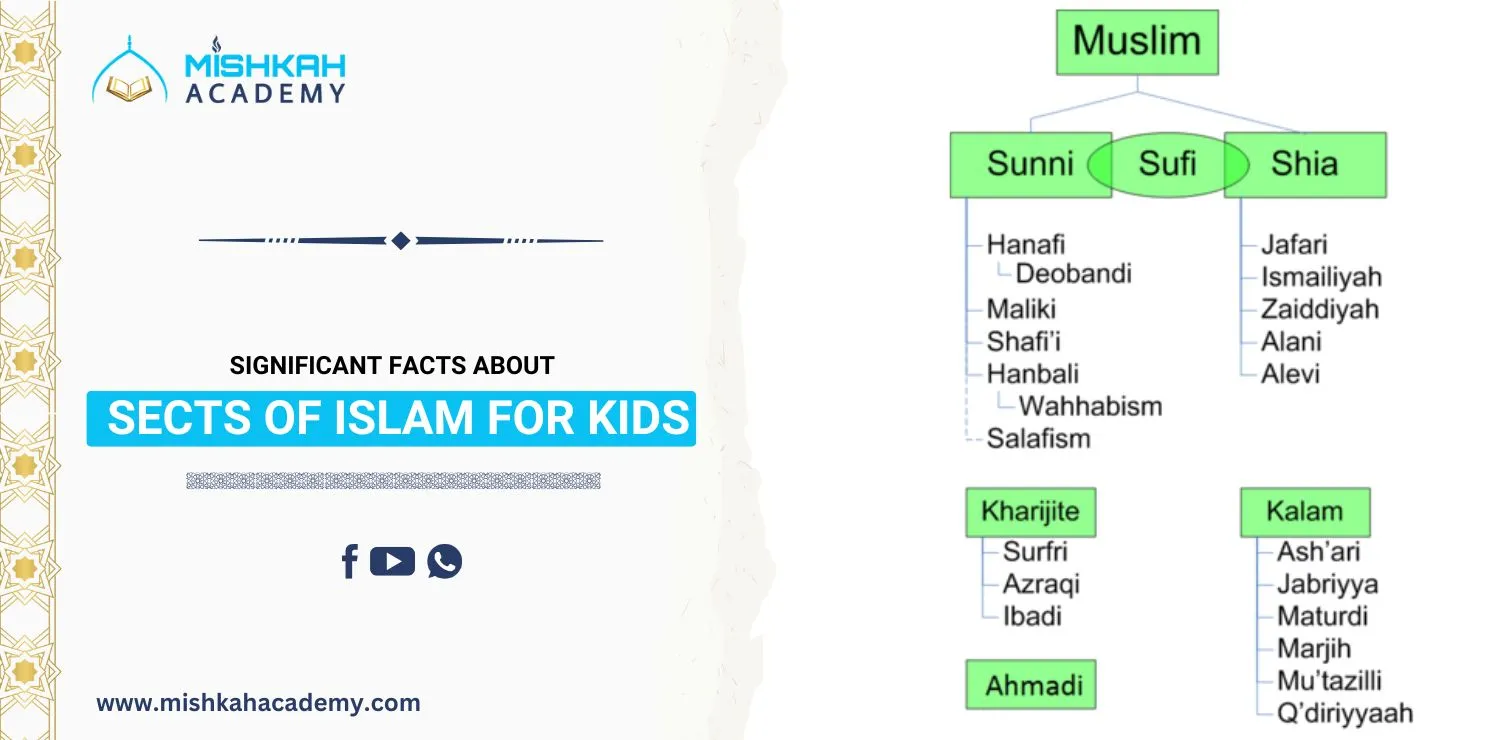
In today’s diverse world, learning about different Islamic sects is important for kids to understand unity and diversity in Islam. Mishkah Academy offers a “Comprehensive Islamic Studies Course For Kids” to introduce them to the basic concepts of various Islamic sects in an age-appropriate way. This guide covers all essential topics, encouraging a deeper connection to Islam while fostering respect and tolerance.
Learn Facts About Sects of Islam for Kids’ Online with Mishkah Academy
At Mishkah Academy, our goal is to provide kids with a well-rounded Islamic education that includes the study of sects within Islam. We focus on nurturing young minds to appreciate Islamic unity while understanding the historical contexts that shaped various Islamic groups.
We offer engaging Best Online Islamic Classes for Kids, covering core subjects like Quran, Tajweed, Arabic, Fiqh, Hadith, Aqeedah, and Tafseer, along with interactive lessons on the facts about sects of Islam.
Why Learn About the Sects of Islam for kids?
Teaching children about Islamic sects helps them:
- Develop an inclusive attitude toward Muslims of different backgrounds.
- Understand the historical events behind the formation of sects.
- Learn how the core beliefs in Islam unite all Muslims despite differences.
- Cultivate a sense of empathy and respect for diversity.
What Are the Major Sects in Islam for kids?
Islamic Sects are groups within the religion that have slightly different practices and interpretations. It’s crucial to introduce kids to these differences with a positive message about unity. Below are some of the key Islamic Sects:
“The Jews split into seventy-one sects, one of which will be in Paradise and seventy in Hell. The Christians split into seventy-two sects, seventy-one of which will be in Hell and one in Paradise. I swear by the One Whose Hand is the soul of Muhammad, my nation will split into seventy-three sects, one of which will be in Paradise and seventy-two in Hell.” Sunan Ibn Majah 3992 – Tribulations
Let Your Kids Learn Quran, Arabic and Islamic Studies from the comfort of your Home with the Best Online Islamic School.
Learn Quran, Arabic & Islamic Online
7 Sects of Islam
Here is a breakdown of the 7 Seven most common sects in Islam along with their theological beliefs, schools of fiqh (Madhabs), and core perspectives and practices.
- Sunni Islam Sect
- Largest sect in Islam, comprising about 85-90% of Muslims globally.
- Core beliefs: Follow the Quran, Hadith (Prophet Muhammad’s teachings), and the consensus of the community (Ijma).
- Subgroups: Hanafi, Maliki, Shafi’i, and Hanbali schools of thought.
- Sufi Islam Sect
- Mystical branch of Islam focusing on inner spirituality and direct connection with Allah through dhikr (remembrance) and devotion.
- Often linked to Sunni traditions, but Sufism emphasizes love, tolerance, and spiritual enlightenment.
- Well-known orders: Qadiriyya, Naqshbandiyya, Chishtiyya, and Mevleviyya.
- Wahhabi / Salafi Sect
- A reformist movement originating in the 18th century, associated with Muhammad ibn Abd al-Wahhab in Saudi Arabia.
- Focus: Strict monotheism (Tawhid) and a literal interpretation of the Quran and Hadith.
- Salafi movement: Broader than Wahhabism, encouraging a return to the ways of the early Muslim community (Salaf).
- Shia Islam Sect
- Believes that leadership after Prophet Muhammad should have remained within the Prophet’s family, specifically with Ali, the Prophet’s cousin and son-in-law.
- Subgroups: Twelvers (largest group), Zaidis, and Ismailis.
- Shia Muslims have distinct rituals, such as commemorating Ashura in honor of Imam Hussein’s martyrdom.
- Ibadi Islam
- Predominantly found in Oman.
- Considered a moderate, conservative branch, it pre-dates Sunni and Shia sects but does not align fully with either.
- Focuses on justice and equality in governance and society.
- Ahmadiyya Islam
- Founded by Mirza Ghulam Ahmad in the late 19th century in India.
- Ahmadis believe that Mirza Ghulam Ahmad was a reformer and prophet, which is controversial as mainstream Muslims believe that Prophet Muhammad is the final prophet.
- Faced with persecution in many Muslim-majority countries.
- Ismaili Islam
- A branch of Shia Islam that follows the teachings of Imam Ismail ibn Jafar.
- Known for: A strong focus on education, community service, and intellectual exploration.
- The Aga Khan is the spiritual leader of many Ismailis today.
| Sect | Description | Key Beliefs / Practices | Geographical Presence |
| 1. Sunni | Largest sect, following the Quran, Hadith, and Ijma (consensus). | Hanafi, Maliki, Shafi’i, Hanbali schools; Emphasis on Sharia. | Global (Middle East, Asia, Africa) |
| 2. Sufi | Mystical branch focusing on inner spirituality and direct connection with Allah. | Practices dhikr (remembrance), spiritual love, and tolerance. | Turkey, South Asia, Middle East |
| 3. Wahhabi / Salafi | Reformist movement advocating strict monotheism (Tawhid) and early practices. | Literal Quran and Hadith interpretation; Return to original Islam. | Saudi Arabia, Gulf countries |
| 4. Shia | Belief in leadership through Prophet’s family, starting with Ali. | Commemorates Ashura; Twelvers, Zaidis, Ismailis as subgroups. | Iran, Iraq, Lebanon, Pakistan |
| 5. Ibadi | Moderate sect, predating Sunni and Shia branches, focusing on justice. | Emphasis on equality and modest governance. | Oman, East Africa |
| 6. Ahmadiyya | Belief in Mirza Ghulam Ahmad as a prophet, facing controversy in mainstream Islam. | Focus on peace, education, and missionary work. | South Asia, Africa, Europe |
| 7. Ismaili | A branch of Shia Islam led by the Aga Khan, with a focus on education. | Emphasis on intellectual development and community service. | Central Asia, East Africa, Canada |
10 Facts About Sects of Islam for kids’
- Two Major Groups in Islam
- The two main sects in Islam are Sunni and Shia.
- Both believe in One God (Allah), the Prophet Muhammad (PBUH), and the Quran.
- What Does Sunni Mean?
- The word “Sunni” comes from “Sunnah“, meaning the practices of Prophet Muhammad (PBUH).
- Sunnis try to follow his teachings and ways in their daily lives.
- How Big is the Sunni Sect?
- Sunnis are the largest group in Islam. Around 85-90% of Muslims worldwide are Sunni.
- Belief About Leadership
- Sunnis believe that after Prophet Muhammad (PBUH) passed away, Abu Bakr, his close friend, became the first leader, or Caliph.
- They believe that leadership should be based on qualifications and community choice.
- Sunni Schools of Thought
- Sunni Muslims follow four main schools of law for understanding Islamic rules:
- Hanafi
- Maliki
- Shafi’i
- Hanbali
- These schools help Muslims interpret the Quran and Hadith (sayings of the Prophet) correctly.
- Sunni Muslims follow four main schools of law for understanding Islamic rules:
- What Sunnis Practice
- Sunnis pray five times a day.
- They fast in Ramadan, give charity (Zakat), and perform Hajj (pilgrimage to Makkah) if possible.
- Sunni Mosques and Imams
- In Sunni mosques, the Imam (prayer leader) is usually someone knowledgeable in the Quran and Sunnah.
- There is no formal priesthood in Sunni Islam—anyone with proper knowledge can lead prayers.
- Importance of the Hadith
- Sunnis follow the Quran and Hadith closely to guide their lives.
- The Hadith includes the sayings and actions of Prophet Muhammad (PBUH).
- Sunni Holidays
- Sunnis celebrate important Islamic events like Eid al-Fitr (after Ramadan) and Eid al-Adha (during Hajj).
- These holidays are times for prayer, giving gifts, and sharing food with family and friends.
- Sunnis Believe in Unity
- Sunnis emphasize peace, unity, and kindness to others.
- They believe that all Muslims, regardless of sect, are part of a brotherhood in Islam.
This overview helps kids understand the basic idea of Islamic Sects and gives special focus on the Sunni sect, its beliefs, practices, and values.
Online Islamic Studies Course for Kids at Mishkah Academy
Mishkah Academy’s Islamic Studies Course makes learning about the facts of Islamic Sects easy and enjoyable for kids. Our classes are interactive, engaging, and based on authentic sources, ensuring children understand the importance of unity.
What Kids Will Learn:
- Basic concepts about the different Sects of Islam.
- Core Islamic principles shared by all Muslims.
- Respect and empathy for people with diverse opinions and practices.
Mishkah Curriculum & Courses for Kids:
- Quran Classes for Kids
- Islamic Classes for Kids
- Arabic Classes for Kids
- Tajweed Classes for Kids
- Tafseer Classes for Kids
- Aqeedah (Islamic beliefs)
- Fiqh (Islamic jurisprudence)
- Hadith (Prophetic traditions)
Benefits of Online Islamic Classes for Kids
Enrolling your child in Mishkah Academy’s Islamic Studies Course ensures a high-quality education at your convenience. Here’s what makes our program stand out:
- Qualified Tutors: Our teachers are native Arab speakers with expertise in Islamic studies.
- Flexible Learning: Classes are available 24/7, making it easy to fit lessons into your child’s schedule.
- Interactive Methods: We use games, quizzes, and multimedia tools to make learning fun.
- Affordable Fees: We offer budget-friendly packages for families worldwide.
- One-on-One or Group Options: Choose between private lessons or small group classes for your child.
Learn Quran, Tajweed, Arabic & Islamic Studies with Mishkah Academy
Mishkah Academy isn’t just about teaching Islamic Sects—we offer holistic Islamic education that covers:
- Quran memorization with proper Tajweed rules.
- Arabic language courses to help children understand the Quran in its original language.
- Hadith studies to instill love for the words of the Prophet (PBUH).
- Aqeedah lessons to build a strong belief system.
- Tafseer courses to unlock the deeper meanings of the Quran.
With our experienced instructors and child-friendly curriculum, we ensure your child gains not only knowledge but also the akills and values to grow into a respectful and compassionate Muslim.
Enroll in Mishkah Academy’s Online Islamic Studies Course Today
Give your child the opportunity to learn about the Facts of Sects in Islam while developing a strong Islamic foundation. Mishkah Academy’s online courses are designed to inspire young learners and provide them with the tools they need to navigate the complexities of life as Muslims.
Enroll today and let your child embark on a meaningful learning journey that covers not only the Facts about Islamic Sects but also the beauty of the Quran, Hadith, and Islamic teachings.
Conclusion
Understanding the diversity within Islam from a young age helps children develop a sense of unity and tolerance. Mishkah Academy’s online Islamic classes for kids are the perfect platform to teach your child about the Facts of Sects in Islam and other essential subjects, such as Quran, Tajweed, Arabic, Fiqh, Aqeedah, and Hadith, etc.
Equip your child with the knowledge and skills to become a well-rounded Muslim. Enroll now at Mishkah Academy and let your child experience the joy of Islamic learning in a fun, interactive, and meaningful way.