Many Muslim parents see that their child learns school lessons quickly, remembers stories with ease, yet struggles to stay consistent with Quran reading as years pass. As school pressure increases and screen time grows, Quran learning often gets delayed. This raises an important question for families who want strong faith and discipline for their children. Starting Quran education early helps build focus, love for the Quran, and a steady routine before distractions become deeply rooted.
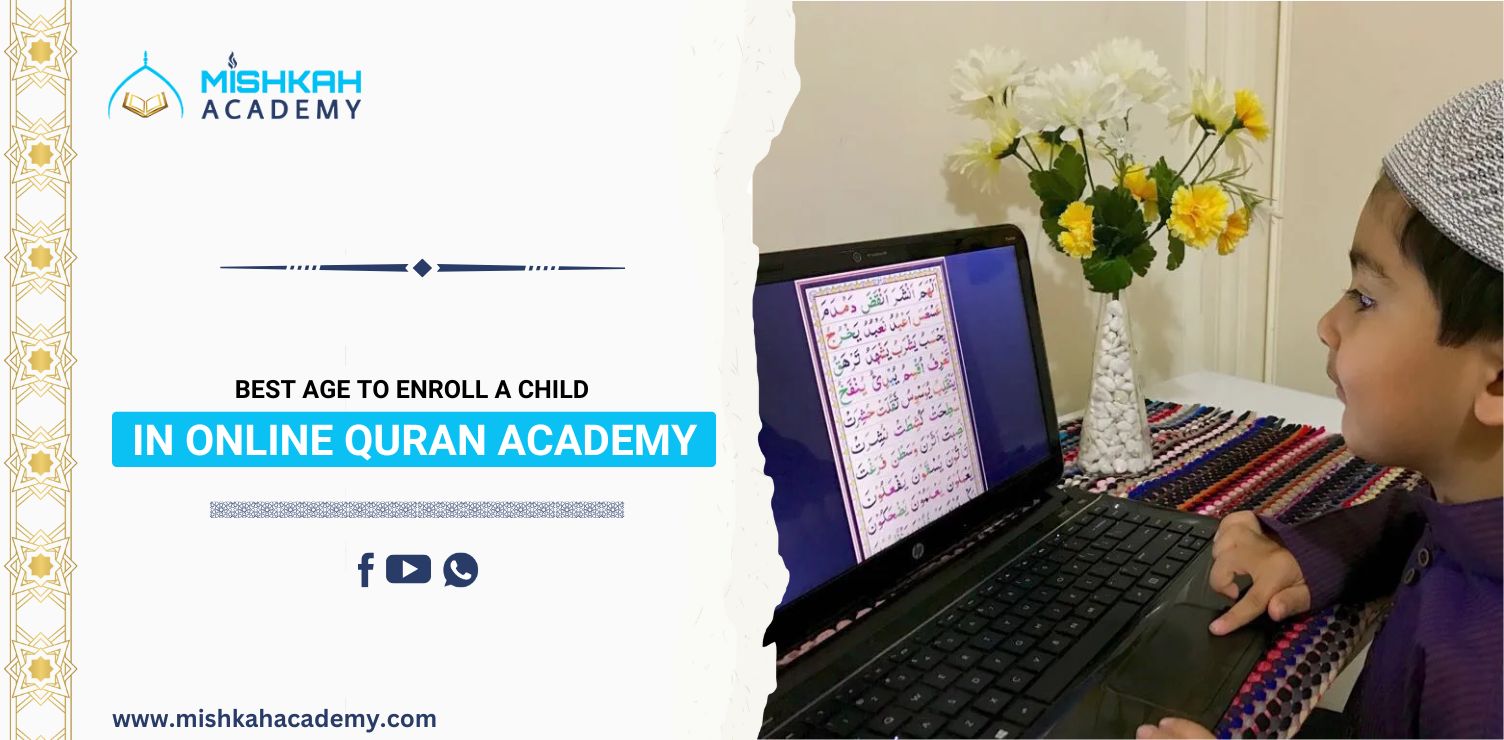
The best age to enroll a child in an online Quran academy is usually between 3 and 7 years. At this stage, memory is strong, pronunciation develops naturally, and learning feels enjoyable rather than forced. Early exposure supports correct recitation, smooth memorisation, and long-term commitment to Hifz, making future Quran learning easier and more consistent.
What Is the Best Age to Start Quran Learning Online
Table of Contents
ToggleThe best age depends on brain growth, listening ability, and routine strength. Online Quran learning works best when a child can listen, repeat, and stay calm for short sessions. Most children reach this stage between ages 3 and 7. At this time, the brain shows high sound sensitivity, which supports clear pronunciation and strong memory. Online learning adds structure, gentle pace, and one-to-one focus, which many homes cannot offer daily.
Best Age Breakdown and Learning Focus
| Age Range | Best Learning Focus | Why It Works |
| 3–4 years | Listening, short duas, small surahs | Brain absorbs sounds fast |
| 5–6 years | Basic Tajweed, repetition, short memorisation | Memory and focus improve |
| 7–8 years | Structured Hifdh with revision | Strong routine and discipline |
| 9+ years | Faster memorization with meaning | Better understanding skills |
Ideal Age Range for Online Quran and Hifz Classes
Most Quran teachers agree that ages 5 to 7 form the strongest base for online Quran learning. Children at this stage can sit longer, repeat accurately, and follow correction without stress.
Scientific studies on child development show that memory retention peaks when learning stays rhythmic and repeated daily. Online hifz classes for kids match this need through short sessions, daily revision, and clear voice modeling from teachers.
Enroll In Online Quran Memorisation Course Today
Why Ages 3–7 Work Best for Memorisation
During early childhood, the brain builds strong sound and pattern links. Quran memorization depends heavily on this ability. Children in this range memorize faster and forget less when revision stays consistent.
- Pronunciation develops naturally
- Memory strengthens through repetition
- Fear of mistakes stays low
- Daily habits form easily
Signs a Child Is Ready for Online Quran Learning
Age alone does not decide readiness. Parents should watch daily behavior and response to learning.
- Can listen for 10–15 minutes
- Enjoys repeating words
- Shows interest in Quran sounds
- Follows simple instructions
- Handles gentle correction calmly
When these signs appear, online Quran learning becomes effective, productive, and emotionally safe for the child.
How Online Quran Academies Support Early Learning
Online Quran academies play a key role during early childhood learning because they align well with how young brains develop. Children between ages 3 to 7 learn best through sound, repetition, and routine. Online platforms offer one-to-one attention, calm pacing, and consistent teacher voices, which help the brain form strong audio patterns.
Studies in child learning show that repeated listening with gentle correction builds long-term memory faster than group learning at this age. Online hifz classes also remove travel stress and allow learning during peak focus hours, which improves retention and emotional comfort.
Importance of Short, Focused Lessons
Young children cannot focus for long periods. Brain research confirms that early attention spans work best in short bursts. For ages 3–4, lessons should stay within 10–15 minutes. For ages 5–7, 20–30 minutes works well.
Short lessons prevent mental overload and reduce resistance. Online Quran academies design sessions around this principle, focusing on repetition rather than volume. This approach keeps the brain relaxed, which directly improves memory strength and pronunciation accuracy.
Starting Quran Learning Before Full Hifz
Before starting full Hifdf, children need exposure. Ages 2–4 benefit most from listening rather than memorising. At this stage, the brain builds sound maps.
Listening to slow recitation, repeating one ayah, or learning short duas prepares the mind for structured memorization later. This step reduces fear and builds comfort with Quran sounds. Children who begin this way often progress faster once formal memorization starts.
How to Teach the Quran to a 3 Year Old?
At age 3, teaching should stay simple and pressure-free. The goal is familiarity, not completion. Use clear recitation, repeated daily at the same time. One short ayah or a small dua is enough.
Brain development research shows that repetition in a calm setting strengthens recall even if progress feels slow. Avoid correction overload. Praise effort, not accuracy. This builds positive emotional links with Quran learning.
How to Teach a 2 Year Old to Pray?
At age 2, learning happens through imitation. Children copy actions long before understanding words. Let the child stand next to you during prayer. Allow movement. Say short phrases softly. This age does not suit instruction or correction.
Neuroscience confirms that motor memory forms early, while verbal memory develops later. Gentle exposure builds interest and comfort, which supports future learning.
Common Age-Related Mistakes Parents Should Avoid
Many parents push for fast results without matching the child’s mental stage. This often weakens focus and long-term retention. Child learning research clearly shows that pressure reduces memory strength and motivation, especially under age seven.
- Expecting memorisation results too early
- Comparing one child’s progress with another
- Increasing lesson time suddenly
- Ignoring daily revision
- Correcting too much during one session
- Choosing age over readiness signals
Why Readiness Matters More Than Age Alone
Age helps guide planning, but readiness drives success. Brain development varies widely among children of the same age. A ready child learns faster, retains more, and stays motivated longer.
- Can sit calmly for short sessions
- Listens attentively to recitation
- Repeats without resistance
- Responds well to gentle correction
- Shows comfort with routine
Final Words
Choosing the right age for Quran learning is important, but choosing the right approach matters more. When lessons match a child’s readiness, memory strengthens naturally and love for the Quran grows. Structured guidance, short sessions, and patient support make the difference. Platforms like Mishkah Academy focus on readiness-led learning, helping children in the US and UK build a strong, joyful, and lasting connection with the Quran.