
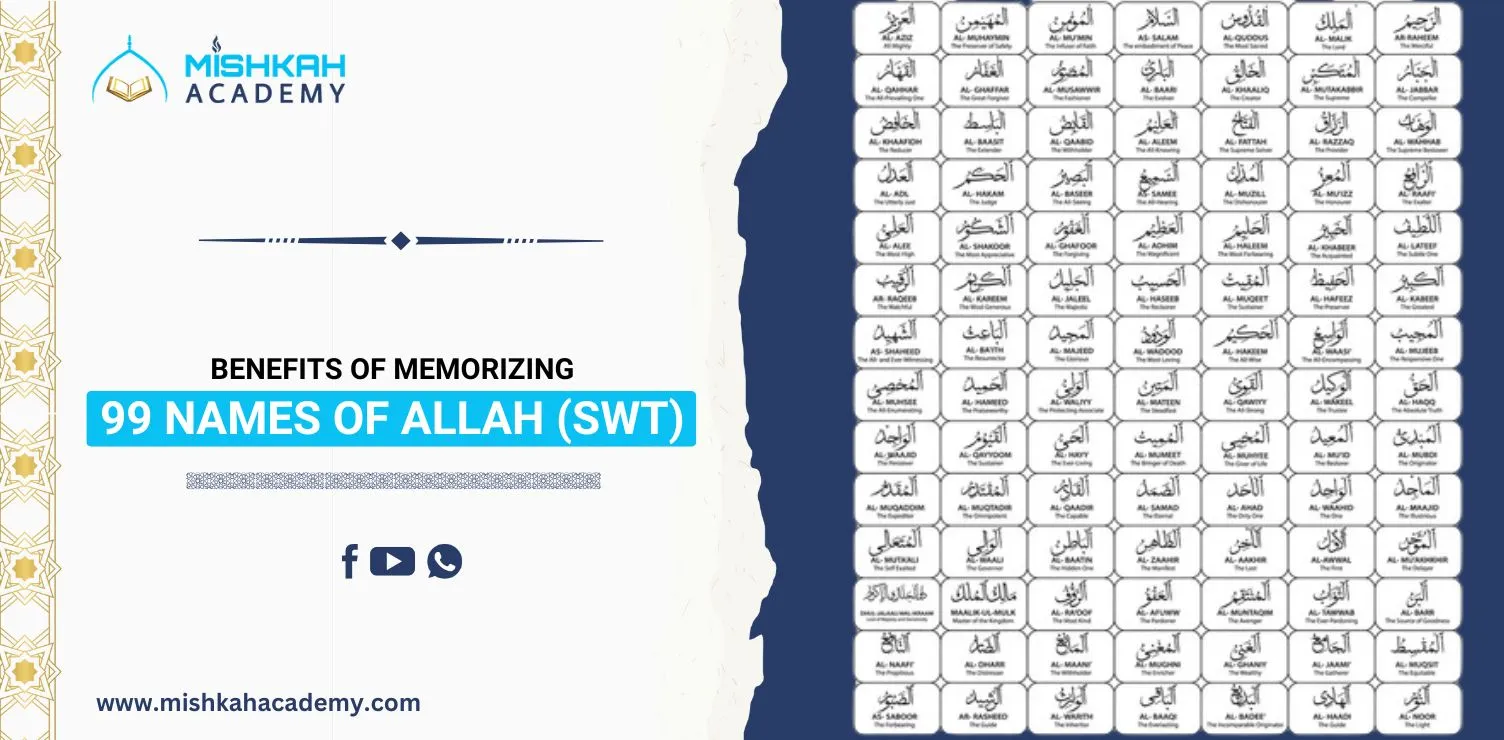
It’s a common practice among Muslims to memorize 99 Names of Allah, known as Asma-ul-Husna. This act offers many practical and spiritual benefits. Memorizing these names can deepen one’s faith, build trust in Allah’s plans, and encourage patience in difficult times. It also helps to guide daily decisions, inspire gratitude, and promote self-reflection.
Furthermore, using these names in prayers and daily life brings a sense of peace and blessings. These benefits highlight why understanding and memorizing Asma-ul-Husna is so important in Islam.
10 Benefits of Memorizing 99 Names of Allah
Table of Contents
ToggleHere are some benefits of learning 99 names of ALLAH to get an amazing rewards in the day of judgment.
1. Strengthens Tawakkul (Trust in Allah)
Memorizing Allah’s names helps to build tawakkul, which means trusting Allah fully. One specific name that supports this is “Al-Wakeel” (ٱلْوَكِيلُ), meaning “The Trustee” or “The Disposer of Affairs.” In the Quran, Allah says,
“And rely upon the Ever-Living who does not die…” (Surah Al-Furqan, Ayah 58).
Knowing that Allah is Al-Wakeel reminds us that He is in control of everything and manages all matters with wisdom. This brings peace, especially in times of hardship.
When we feel anxious or uncertain, calling upon Al-Wakeel can help us let go of worries, knowing that Allah is handling our affairs perfectly. Trusting in Al-Wakeel leads to calmness and patience, even during challenges.
2. Guides Daily Choices Through Asma-ul-Husna
The Asma-ul-Husna can guide daily decisions by reminding us of Allah’s qualities. For instance, “Ar-Rahman” (ٱلرَّحْمَـٰنُ), meaning “The Most Merciful,” inspires us to show kindness and mercy in our actions. When making a choice, remembering Ar-Rahman can help us act with compassion. Another name, “Al-Adl” (ٱلْعَدْلُ), meaning “The Just,” reminds us to be fair and honest.
Reflecting on Al-Adl can guide us to make just and fair decisions. When you understand Allah’s names and qualities, we’re encouraged to adopt those qualities in our lives, leading to better choices that reflect Allah’s guidance.
3. Encourages Consistent Patience in Hardships
Memorizing Allah’s names strengthens patience, especially in hard times. One name that supports this is “As-Sabur” (ٱلصَّبُورُ), meaning “The Most Patient.” Reflecting on As-Sabur reminds us that Allah is patient with His creation and knows the right time for everything.
In the Quran, patience is encouraged as a path to success, and Allah’s timing is always perfect. Remembering As-Sabur during challenges helps us stay calm and trust Allah’s plan. It reminds us that life’s trials are temporary and that enduring them brings reward.
4. Fosters Sincerity in Worship Practices
Knowing Allah’s names encourages sincere worship. One name that fosters sincerity is “Al-Mu’min” (ٱلْمُؤْمِنُ), meaning “The Giver of Faith” or “The One Who Grants Security.” Recognizing that Allah is Al-Mu’min reminds us that true faith comes from Him.
This helps us worship Allah (SWT) with honesty, focusing on pleasing Allah rather than impressing others. It reminds us that Allah sees our intentions, even what’s hidden in our hearts. Sincerity in worship means praying, fasting, or giving charity to Allah alone. So everyone who is completing quran memorization program must learn names of Allah simultaneously.
Start Your Quran Journey Now5. Promotes Repentance and Self-Reflection
Learning Allah’s names can lead us to repentance and self-reflection. One important name here is “At-Tawwab” (ٱلتَّوَّابُ), meaning “The Accepter of Repentance.” Allah is always ready to forgive those who sincerely turn back to Him. This gives us hope, even after making mistakes.
Reflecting on At-Tawwab encourages us to look within, admit our wrongdoings, and seek forgiveness. Repentance isn’t just about saying sorry; it’s about feeling regret and promising to do better.
6. Inspires Gratitude Through Allah’s Generosity
Memorizing Allah’s names makes us more grateful. One name that inspires gratitude is “Ar-Razzaq” (ٱلْرَّزَّاقُ), meaning “The Provider.” Allah, as Ar-Razzaq, is the source of all blessings and provisions.
When we reflect on this, we realize that everything we have – food, shelter, family – comes from Allah. This understanding brings a deep sense of gratitude for even the smallest things in life. Knowing Allah as Ar-Razzaq reminds us to thank Him daily, recognizing His generosity.
7. Enhances Heartfelt Dhikr (Remembrance)
The Asma-ul-Husna make dhikr (remembrance of Allah) more meaningful. Dhikr is saying Allah’s names or praising Him to remember Him deeply. Using names like “Al-Aleem” (ٱلْعَلِيمُ), meaning “The All-Knowing,” helps us feel closer to Allah.
Reflecting on Al-Aleem reminds us that Allah knows everything about us, our struggles, and our hidden thoughts. This can make our dhikr more sincere, allowing us to feel Allah’s presence in our lives.
8. Brings Protection with Asma-ul-Husna
Reciting specific names of Allah can help bring protection in various aspects of life. Here’s how:
- “Al-Hafiz” (ٱلْحَفِيظُ) means “The Protector.” Calling on Al-Hafiz reminds us that Allah guards us from harm.
- Saying Al-Hafiz when we feel unsafe or anxious can strengthen our sense of security.
- “As-Salaam” (ٱلْسَّلَامُ) means “The Source of Peace.” Reciting it regularly brings calmness and protection from inner fears.
- Reflecting on these names during difficult times can build a mental shield, knowing Allah’s presence is with us.
Using these names in our daily prayers enhances our sense of safety and helps us rely on Allah for protection.
9. Reinforces Forgiveness in Relationships
The Asma-ul-Husna can help us become forgiving, especially in our relationships. One name that supports this is “Al-Ghaffar” (ٱلْغَفَّارُ), meaning “The Ever-Forgiving.” Allah constantly forgives us, no matter how often we make mistakes. Reflecting on Al-Ghaffar encourages us to show the same forgiveness to others.
We realize that if Allah can forgive our sins, we too should forgive others’ mistakes. This attitude helps reduce resentment and anger, creating peace in relationships. Forgiveness builds stronger bonds with family, friends, and even strangers.
10. Invites Barakha (Blessings into Life
Memorizing Allah’s names brings barakah, or blessings, into different parts of our lives. For example, “Ar-Rahman” (ٱلرَّحْمَـٰنُ), meaning “The Most Merciful,” reminds us that Allah showers mercy on us daily. Reflecting on Ar-Rahman encourages us to show kindness, which brings blessings in return. When we act with mercy, Allah blesses our lives with ease and happiness.
For instance, think about someone working hard in their job while staying kind and fair. They are honest, they help others, and they remember Allah’s names often. This person may find unexpected success, helpful colleagues, or peaceful family life. This is barakah – blessings that come from living in a way that pleases Allah.
Learn 99 Names of Allah With Meanings For Better Understanding
| 99 Allah Names in English | In Arabic | English Meaning |
| Ar-Rahmaan | الرَّحْمَنُ | The Beneficent |
| Ar-Raheem | الرَّحِيمُ | The Merciful |
| Al-Malik | الْمَلِكُ | The King |
| Al-Quddus | الْقُدُّوسُ | The Most Sacred |
| As-Salam | السَّلاَمُ | The Source of Peace |
| Al-Mu’min | الْمُؤْمِنُ | The Infuser of Faith |
| Al-Muhaymin | الْمُهَيْمِنُ | The Preserver of Safety |
| Al-Aziz | الْعَزِيزُ | All Mighty |
| Al-Jabbar | الْجَبَّارُ | The Compeller |
| Al-Mutakabbir | الْمُتَكَبِّر | The Supreme |
| Al-Khaaliq | الْخَالِقُ | The Creator |
| Al-Musawwir | الْبَارِئُ | The Fashioner |
| Al-Ghaffar | الْغَفَّارُ | The Constant Forgiver |
| Al-Qahhar | الْقَهَّارُ | The All-Prevailing One |
| Al-Wahhaab | الْوَهَّابُ | The Supreme Bestower |
| Ar-Razzaaq | الرَّزَّاقُ | The Provider |
| Al-Fattaah | الْفَتَّاحُ | The Supreme Solver |
| Al-‘aleem | اَلْعَلِيْمُ | The All-Knowing |
| Al-Qaabid | الْقَابِضُ | The Withholder |
| Al-Baasit | الْبَاسِطُ | The Extender |
| Al-Khaafidh | الْخَافِضُ | The Reducer |
| Ar-Raafi’ | الرَّافِعُ | The Exalter |
| Al-Mu’izz | الْمُعِزُّ | The Honourer |
| Al-Muzil | ٱلْمُذِلُّ | The Dishonourer |
| As-Samee’ | السَّمِيعُ | The All-Hearing |
| Al-Baseer | الْبَصِيرُ | The All-Seeing |
| Al-Hakam | الْحَكَمُ | The Impartial Judge |
| Al-‘adl | الْعَدْلُ | The Utterly Just |
| Al-Lateef | اللَّطِيفُ | The Most Gentle |
| Al-Khabeer | الْخَبِيرُ | The All-Aware |
| Al-Haleem | الْحَلِيمُ | The Most Forbearing |
| Al-‘azeem | الْعَظِيمُ | The Magnificent |
| Al-Ghafoor | الْغَفُور | The Great Forgiver |
| Ash-Shakoor | الشَّكُورُ | The Most Appreciative |
| Al-‘alee | الْعَلِيُّ | The Exalted |
| Al-Kabeer | الْكَبِيرُ | The Most Great |
| Al-Hafeedh | الْحَفِيظُ | The Preserver |
| Al-Muqeet | المُقيِت | The Sustainer |
| Al-Haseeb | اﻟْﺣَسِيبُ | The Reckoner |
| Al-Jaleel | الْجَلِيلُ | The Majestic |
| Al-Kareem | الْكَرِيمُ | The Most Generous |
| Ar-Raqeeb | الرَّقِيبُ | The Watchful |
| Al-Mujeeb | ٱلْمُجِيبُ | The Responsive One |
| Al-Waasi’ | الْوَاسِعُ | The All-Encompassing |
| Al-Hakeem | الْحَكِيمُ | The All-Wise |
| Al-Wadud | الْوَدُودُ | The Most Loving |
| Al-Majeed | الْمَجِيدُ | The Glorious |
| Al-Ba’ith | الْبَاعِثُ | The Infuser of New Life |
| Ash-Shaheed | الشَّهِيدُ | The All Observing Witnessing |
| Al-Haqq | الْحَقُ | The Absolute Truth |
| Al-Wakeel | الْوَكِيلُ | The Trustee |
| Al-Qawiyy | الْقَوِيُ | The All-Strong |
| Al-Mateen | الْمَتِينُ | The Firm |
| Al-Waliyy | الْوَلِيُّ | The Protecting Associate |
| Al-Hameed | الْحَمِيدُ | The Praiseworthy |
| Al-Muhsee | الْمُحْصِي | The Counter |
| Al-Mubdi | الْمُبْدِئُ | The Originator |
| Al-Mueed | ٱلْمُعِيدُ | The Restorer |
| Al-Muhyi | الْمُحْيِي | The Giver of Life |
| Al-Mumeet | اَلْمُمِيتُ | The Creator of Death |
| Al-Hayy | الْحَيُّ | The Ever-Living |
| Al-Qayyoom | الْقَيُّومُ | The Sustainer |
| Al-Waajid | الْوَاجِدُ | The Perceiver |
| Al-Maajid | الْمَاجِدُ | The Illustrious |
| Al-Waahid | الْواحِدُ | The One |
| Al-Ahad | اَلاَحَدُ | The Unique |
| As-Samad | الصَّمَدُ | The Eternal |
| Al-Qadeer | الْقَادِرُ | The Omnipotent One |
| Al-Muqtadir | الْمُقْتَدِرُ | The Powerful |
| Al-Muqaddim | الْمُقَدِّمُ | The Expediter |
| Al-Mu’akhkhir | الْمُؤَخِّرُ | The Delayer |
| Al-Awwal | الأوَّلُ | The First |
| Al-Aakhir | الآخِرُ | The Last |
| Az-Zaahir | الظَّاهِرُ | The Manifest |
| Al-Baatin | الْبَاطِنُ | The Hidden One |
| Al-Waali | الْوَالِي | The Sole Governor |
| Al-Muta’ali | الْمُتَعَالِي | The Self Exalted |
| Al-Barr | الْبَرُّ | The Source of All Goodness |
| At-Tawwab | التَّوَابُ | The Ever-Pardoning |
| Al-Muntaqim | الْمُنْتَقِمُ | The Avenger |
| Al-‘afuww | العَفُوُ | The Pardoner |
| Ar-Ra’oof | الرَّؤُوفُ | The Most Kind |
| Maalik-Ul-Mulk | َمَالِكُ ٱلْمُلْكُ | Master of the Kingdom |
| Dhul-Jalaali Wal-Ikraam | ذُوالْجَلاَلِ وَالإكْرَامِ | Lord of Glory and Honour |
| Al-Muqsit | الْمُقْسِطُ | The Just One |
| Al-Jaami’ | الْجَامِعُ | The Gatherer |
| Al-Ghaniyy | ٱلْغَنيُّ | The Self-Sufficient |
| Al-Mughni | ٱلْمُغْنِيُّ | The Enricher |
| Al-Mani’ | اَلْمَانِعُ | The Withholder |
| Ad-Dharr | الضَّارَ | The Distresser |
| An-Nafi’ | النَّافِعُ | The Propitious |
| An-Nur | النُّورُ | The Light |
| Al-Haadi | الْهَادِي | The Guide |
| Al-Badee’ | الْبَدِيعُ | The Incomparable Originator |
| Al-Baaqi | اَلْبَاقِي | The Everlasting |
| Al-Waarith | الْوَارِثُ | The Inheritor |
| Ar-Rasheed | الرَّشِيدُ | The Guide |
| As-Saboor | الصَّبُورُ | The Forbearing |
Why Study the Names of Allah (SWT)?
Studying and memorizing the names of Allah (SWT) deepens our understanding of who He is and how we should relate to Him. Each name reveals a unique attribute, guiding us to build a more sincere belief in Allah. Knowing His names helps us rely on Him for our needs, seek forgiveness, and express gratitude.
As Allah says in the Quran in surah Al-Araf, “To Him belong the best names, so invoke Him by them.” This practice strengthens our connection and devotion to Him.
What is the Most Powerful Name of Allah (SWT)?
The most powerful name of Allah (SWT) is often considered to be Ar-Rabb (The Master and Sustainer), which highlights His authority and role as the provider. Muqallibal-Qulub (Changer of Hearts) reminds us that Allah has control over our hearts and guides us.
Al-Mannan (The All-Giving) reflects His endless generosity, while Al-Muhsin (The One Who Continually Does Good) shows His constant kindness. Each of these names enhances our understanding of Allah’s greatness and mercy.
What are the Benefits of Repeating ALLAH (SWT) Names?
Repeating Allah (SWT)’s names brings many spiritual benefits. For example, if someone recites a specific name of Allah 100 times, it can help sharpen their memory. Writing the name of Allah on bread, then eating it on Friday night, can inspire greater self-discipline and make it easier to follow good habits.
Reciting certain names often is also believed to bring forgiveness for past mistakes. Each name has its own unique effect, offering blessings like inner peace, strength, and guidance. So if you are enrolling in hifz qurna course then must repeat asma ul husna daily.
Conclusion
As there are lots of benefits to memorizing quran, same as repeating the names of Allah (SWT) offers profound spiritual and practical benefits, enriching our connection to Him and guiding us in daily life. These names deepen our understanding of Allah’s mercy, forgiveness, and power.
For those looking to master Quranic knowledge, Mishkah Academy is an excellent platform to learn quran online. They specialize in helping individuals memorize and understand Quran-related content, including Allah’s names.
Start Your Quran Journey Now