The phrase “Alhamdulillah Ala Kulli Haal” beautifully reflects gratitude in every situation. It is often linked to the spirit of Surah Al-Fatiha, which begins with “Alhamdulillahi Rabbil ‘Alamin” — meaning All praise is for Allah, Lord of the Worlds. This Surah teaches Muslims to thank Allah not only in moments of happiness but also in times of hardship, reminding believers that every condition carries divine wisdom.
Simply put, “Alhamdulillah Ala Kulli Haal” means All praise is due to Allah in every situation. Muslims say it to express contentment, patience, and trust in Allah’s plan — knowing that every event, good or bad, comes from His perfect wisdom and mercy.
What Does “Alhamdulillah Ala Kulli Haal” Mean?
Table of Contents
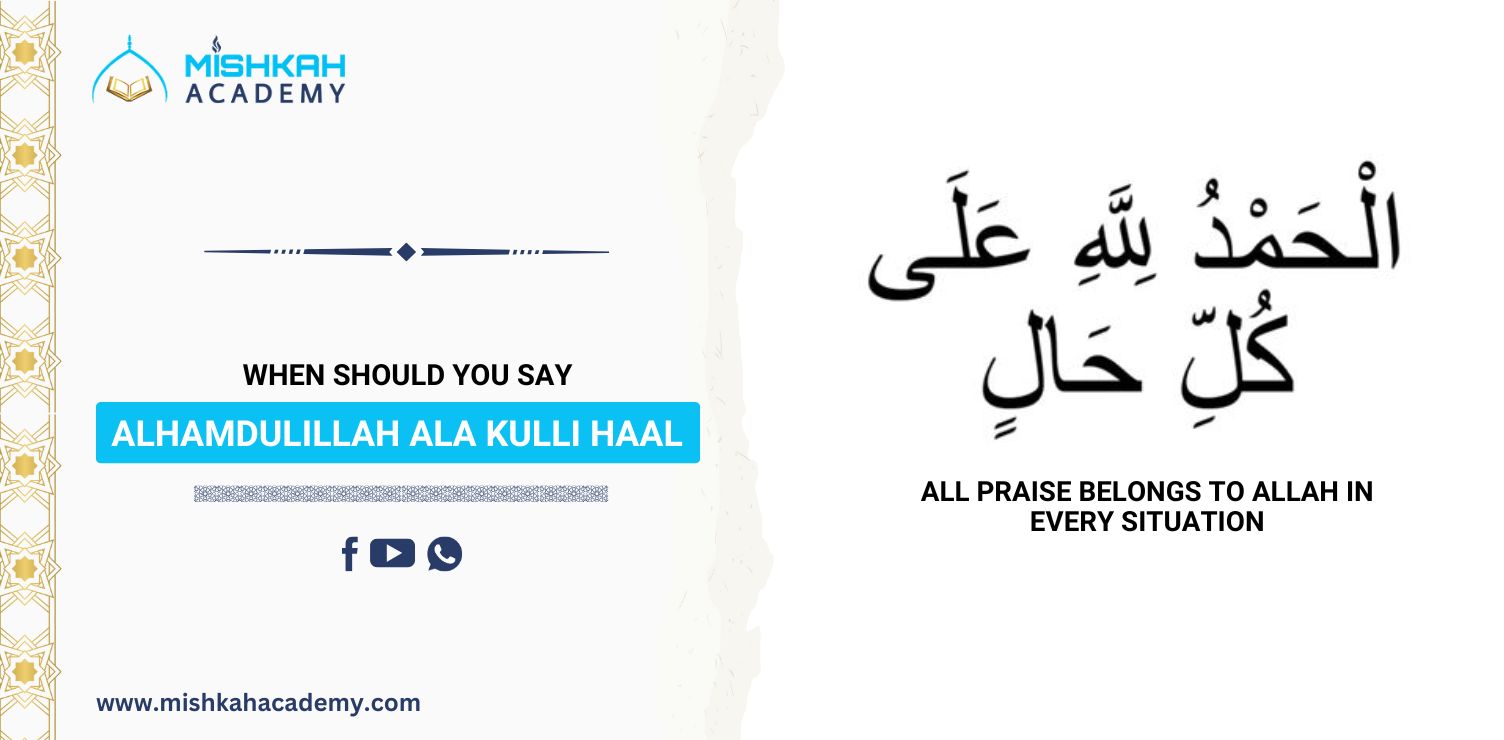
ToggleThe phrase “Alhamdulillah Ala Kulli Haal” (الحمد لله على كل حال) is a powerful reminder of gratitude in every condition of life. It means “All praise is due to Allah in every situation.” Muslims say it to express thankfulness to Allah not only when things go right but also when life becomes difficult. It shows complete trust in Allah’s plan and belief that every moment, good or bad, carries wisdom and benefit.
In Islam, this short phrase carries a deep spiritual message — that gratitude should never depend on circumstances. Saying “Alhamdulillah Ala Kulli Haal” helps believers remain calm, hopeful, and patient when life tests them. It keeps the heart connected to Allah and strengthens faith during times of ease and hardship alike.
Literal Translation and English Meaning
Let’s break it down simply:
- Alhamdulillah (الحمد لله) – All praise and thanks are for Allah.
- Ala (على) – Upon / for / in.
- Kulli (كل) – Every / all.
- Haal (حال) – Condition / situation / state.
Together, it forms the meaning: “All praise belongs to Allah in every situation.”
In easy words, it means being thankful to Allah at all times — not only when life feels perfect, but also when facing loss, sadness, or delay. This balance of gratitude is a sign of true faith and patience.
Arabic Script and Transliteration
Arabic: ٱلْـحَـمْـدُ لِـلّٰـهِ عَـلَـى كُـلِّ حَـالٍ
Transliteration: Alhamdulillahi ‘ala kulli haal
This phrase can be recited in prayer, reflection, or daily conversation. Many Muslims use it after hearing news that may not be pleasant, as a way to still praise Allah with acceptance and trust.
What Is the Origin of “Alhamdulillah Ala Kulli Haal” in Islam?
The origin of this phrase comes from the teachings of Prophet Muhammad ﷺ. It is reported in Sunan Ibn Majah (3803) that whenever the Prophet ﷺ saw something pleasing, he would say:
“Alhamdulillahi allathee bini’matihi tatimmu assalihaat”
(“All praise is to Allah by whose favor good deeds are completed.”)
And when he saw something he disliked, he would say:
“Alhamdulillahi ‘ala kulli haal.”
(“All praise is to Allah in every situation.”)
This shows that the Prophet ﷺ encouraged believers to express gratitude in every circumstance — happiness or sorrow. It reflects strong faith, patience, and complete submission to Allah’s will.
Hadith Reference and Explanation
The above hadith teaches that life’s ups and downs are both part of Allah’s divine plan. When something good happens, a believer should thank Allah for His blessings. When hardship strikes, the believer should still say “Alhamdulillah Ala Kulli Haal” — recognizing that even in trials, Allah’s mercy and wisdom are at work.
Note: Mishkah Academy teaches about important Arabic words in detail and how to pronounce and with proper meanings in its “Online Arabic conversation course”
When Should You Say “Alhamdulillah Ala Kulli Haal”?
You can say it anytime, especially when things don’t go as planned. Muslims often say it:
- After receiving disappointing news.
- During personal or financial struggles.
- When facing illness or difficulty.
- In times of emotional pain or loss.
- After a test or failure, to show patience and faith.
You can also say it in moments of reflection, reminding yourself that Allah controls every outcome. Using this phrase daily builds a habit of gratitude and humility.
It doesn’t mean ignoring pain — it means recognizing that Allah knows best and will bring good out of every situation.
What Is the Wisdom Behind Saying It in Every Situation?
The wisdom behind this phrase lies in contentment and trust. Life constantly changes, but a believer’s gratitude should not. Saying “Alhamdulillah Ala Kulli Haal” helps the heart stay balanced — neither proud in success nor hopeless in struggle.
It teaches emotional stability and reminds Muslims that every test carries hidden good. When said sincerely, it removes complaints, eases the heart, and strengthens the soul.
In the Qur’an, Allah says:
“If you are grateful, I will surely increase you [in favor].” (Surah Ibrahim, 14:7)
Gratitude in hardship brings peace, and patience brings reward. That’s why this simple phrase is so powerful — it transforms pain into remembrance, sadness into faith, and fear into calmness.
What Are the Benefits of Saying “Alhamdulillah Ala Kulli Haal”?
This short yet powerful phrase brings peace to the heart and strengthens one’s connection with Allah. Here are some of its key benefits:
- Increases inner peace: It helps calm the mind when facing difficulties, reminding you that Allah is always in control.
- Builds patience and trust: Saying it develops sabr (patience) and faith in Allah’s plan, even during hardship.
- Reduces complaints: It stops you from focusing on problems and redirects your thoughts toward gratitude.
- Brings emotional balance: It prevents arrogance in success and hopelessness in loss.
- Opens doors to reward: Allah loves those who remain grateful in every condition.
- Strengthens faith: Regularly saying it keeps the heart attached to Allah and away from negativity.
- Encourages a positive mindset: It transforms challenges into opportunities for growth and learning.
How Is It Different from Just Saying “Alhamdulillah”?
Both phrases show gratitude, but they differ in purpose and timing.
| Aspect | Alhamdulillah | Alhamdulillah Ala Kulli Haal |
| Meaning | All praise is due to Allah. | All praise is due to Allah in every situation. |
| When It’s Used | Commonly used during blessings or good news. | Said during hardship, difficulty, or disappointment. |
| Emotional Expression | Expresses joy and thankfulness. | Expresses patience, acceptance, and faith. |
| Purpose | To thank Allah for favors. | To thank Allah even when things are not in your favor. |
| Depth of Faith | Reflects gratitude. | Reflects deep trust and surrender to Allah’s will. |
So, while “Alhamdulillah” is for moments of happiness, “Alhamdulillah Ala Kulli Haal” shines when life gets hard — proving that a believer’s gratitude never fades.
What Are Common Mistakes or Misuses of This Phrase?
Many people say “Alhamdulillah Ala Kulli Haal” without realizing its true meaning. Here are some common mistakes:
- Using it casually without reflection – Saying it as a habit instead of from the heart weakens its value.
- Saying it with frustration – Some people say it in anger or sarcasm, which goes against its purpose.
- Mixing it up with “Inna Lillahi wa Inna Ilayhi Raji’un” – The latter is for loss or death, not general hardship.
- Not acting upon its meaning – True gratitude is shown through patience and good behavior, not just words.
- Forgetting it during blessings – It’s not only for tough times; it reminds us to praise Allah at all times.
Using this phrase sincerely brings peace and aligns your heart with the teachings of the Prophet ﷺ.
How Can You Practice Gratitude Through “Alhamdulillah Ala Kulli Haal” Daily?
Building gratitude takes practice. This phrase can help you live with calmness and faith every day.
Simple Ways to Apply It in Everyday Life
- Start your morning with this phrase before any task.
- Say it when plans change or challenges appear.
- Reflect on one blessing each night and thank Allah for it.
- Write down three positive things from your day — even small ones.
- Respond with this phrase when someone shares unpleasant news.
These small acts slowly shift your heart from worry to contentment.
Islamic Reminder on Patience and Gratitude
The Prophet ﷺ said,
“How wonderful is the case of a believer! There is good for him in everything.” (Muslim)
When things go right, he thanks Allah — and when they don’t, he stays patient. “Alhamdulillah Ala Kulli Haal” embodies this teaching completely.
Final Words
“Alhamdulillah Ala Kulli Haal” reminds believers that true peace comes from trusting Allah in every situation. Gratitude isn’t only for ease — it’s for hardship too. Living with this mindset brings calm, hope, and unwavering faith.
To strengthen your understanding of gratitude and faith through the Quran, join Mishkah Academy. Learn online Islamic studies and Tajweed online with expert tutors dedicated to helping you grow spiritually every day.